In a revealing third-quarter earnings report, Berkshire Hathaway showcased a strategic shift as the company navigates an evolving market landscape. The report, released on Saturday, indicated that Warren Buffett, the long-time CEO, has continued to divest more than he invests, signaling a cautious approach in the face of economic uncertainty. This marks the 12th consecutive quarter of net selling for the conglomerate, which sold $12.5 billion worth of stock while acquiring $6.4 billion in the latest period.
Berkshire’s cash reserves also reached an unprecedented high of $382 billion. The company’s operating earnings surged by 34%, yet Buffett has refrained from stock buybacks for five consecutive quarters. This rising cash position reflects a deliberate shift towards safer investments amid fluctuating market conditions.
While the stock portfolio has dwindled, there has been a noticeable pivot toward Treasury debt, particularly as short-term interest rates have recently declined. However, this change has been met with a drop in net investment income, which fell by 13% to $3.2 billion in the third quarter.
The cautious investment strategy can be traced back to 2022, when the Federal Reserve initiated its most robust rate-hiking campaign in over four decades to combat inflation. This move affected stock valuations significantly, yet it did not seem to prompt Buffett’s trademark bargain-hunting instincts. Following the Fed’s shift to cutting rates, the market experienced a rally that led to new heights.
This year’s market volatility, particularly the dramatic selloff in April following President Donald Trump’s tariff announcements, did not sway Buffett from his strategy. In the second quarter alone, Berkshire underwent a net stock sale of $3 billion. Despite this, the market quickly rebounded, reaching new peaks driven mainly by advancements in AI-related companies.
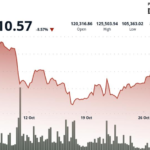
Berkshire Hathaway’s own shares, however, have not fared as well, witnessing a 12% decline since Buffett announced his plans to step down as CEO by year’s end, passing the leadership role to Greg Abel. While Buffett is anticipated to continue as chairman, his current strategy appears to be designed to facilitate a smoother transition for Abel, who had already begun assuming greater leadership responsibilities prior to this announcement.
In a notable development last month, Berkshire Hathaway finalized a significant acquisition of Occidental Petroleum’s chemicals business for nearly $10 billion, potentially marking one of Buffett’s final major deals. This move may also enhance Berkshire’s substantial ownership stake in Occidental, which stands at nearly 30%. The announcement, made on October 2, distinguished itself as Berkshire’s largest acquisition since the purchase of insurer Alleghany in 2022, noteworthy for being the first to reference Abel without mentioning Buffett directly.
Energy analyst Doug Leggate from Wolfe Research characterized the deal as a “genius” move for Berkshire, suggesting it was mutually beneficial, not only bolstering Berkshire’s portfolio but also assisting Occidental. He remarked that the decision made logical sense and served the interests of both companies, albeit in a way that was entirely straightforward and aboveboard.
As Berkshire Hathaway charts its course in the coming months, all eyes will be on how Abel navigates the conglomerate in a complex economic climate, especially as Buffett steps back from the helm for the first time in decades.