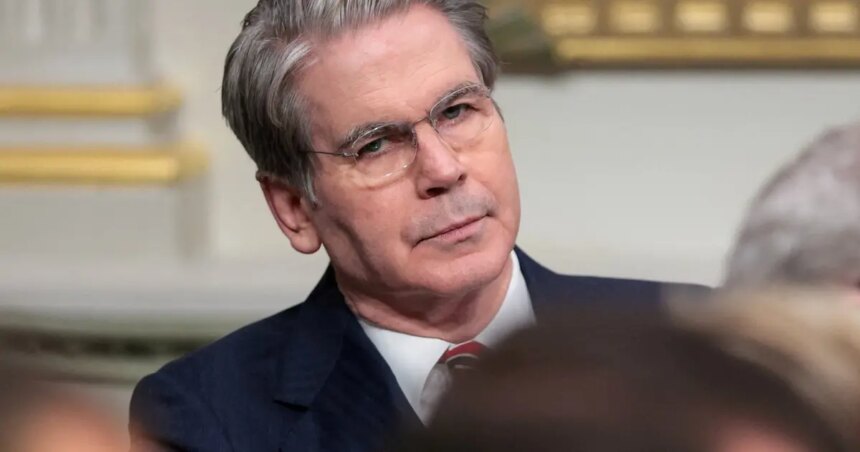
In a recent 23-minute interview at the inaugural Treasury Secretary Dinner hosted by Semafor World Economy at the Library of Congress, prominent economist Bessent shared insights on several pressing financial topics, including an anticipated executive order mandating banks to collect customer citizenship information. Bessent remarked, “It’s in process. And I don’t think it’s unreasonable, because: Why don’t we have information on who’s in our banking system? I have a place in the UK; they want to know who lives in every apartment — and how do we know that it’s not part of a foreign terrorist organization?”
The conversation also touched on the pending nomination of Kevin Warsh to the Federal Reserve. Bessent emphasized the importance of an open-minded approach, stating, “My criteria is who has an open mind. … With the Fed, you expect a monetary policy board, but you never think there’s this sprawling organization up there.” He expressed concern over the management structure within Federal Reserve banks, noting that around 50% of personnel in each reserve bank do not report to the president, which he described as a “management disaster.”
Addressing political dynamics, Bessent commented on Senator Thom Tillis of North Carolina’s opposition to Warsh’s nomination due to the Trump administration’s investigation into Fed Chair Jerome Powell: “We’ll have to see what Senator Tillis needs to do.”
The discussion shifted to the subject of insider trading in prediction markets. Bessent indicated that he had recently spoken to the head of the Commodity Futures Trading Commission (CFTC) and found no unusual activities. He believes that prediction markets can serve as valuable tools, stating, “People always forget in markets what’s priced in and what’s unexpected. So I think the good thing about prediction markets is it tells you where the consensus is.”
On the topic of artificial intelligence and its potential to make banks susceptible to cyberattacks, Bessent characterized reports of a meeting with bank CEOs regarding Anthropic’s Mythos as “dramatized.” He clarified that the gathering was simply a convenient opportunity to discuss cybersecurity and to address concerns around large language models.
When questioned about collaboration with Anthropic on these cyber threats, he affirmed, “Of course. They have a very specific issue with DOW. So to the extent that they are widely used in the market, we would.”
Turning to international matters, Bessent dismissed fears that the ongoing conflict in Iran could diminish the strength of the US dollar, asserting, “Well, as you’ve seen during the war, the dollar is strengthened. So I’m not worried about that.”
He also critiqued the US’s perception of China’s leverage regarding rare earths, admitting, “I actually think they miscalculated, because … three times in five years, they have proved that they’re not a reliable supplier,” referencing disruptions related to COVID-19 and other energy products.
As the conversation veered towards trade relations with China, particularly concerning the automotive sector, Bessent speculated on the potential establishment of two boards: a Board of Trade and perhaps a Board of Investment. He added, “I think there are these things that I would think maybe the auto industry would supply. I have a house out of the country … and a lot of my neighbors have their small SUVs, and I will tell you it is the best $75,000 car that $35,000 can buy. It is clearly highly subsidized.”
Bessent’s remarks covered a wide array of critical economic issues, reflecting a nuanced understanding of the interplay between domestic policies and global economic conditions.