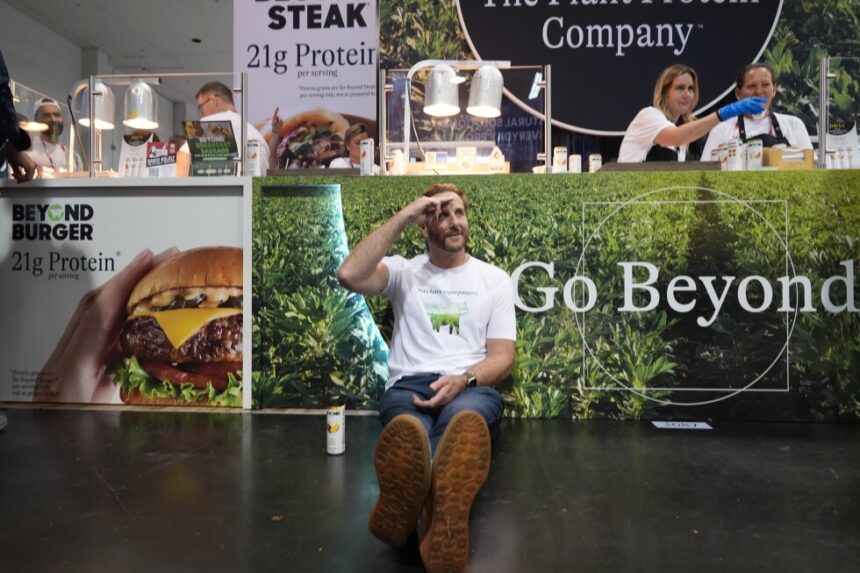
Beyond Meat has announced a significant rebranding initiative, dropping “meat” from its name to reflect its broader focus beyond the traditional market for plant-based burgers, sausages, and tenders. The company is now known as Beyond The Plant Protein Co., or simply Beyond in its branding. This change comes alongside the launch of its new website and updated social media channels.
The rebrand aims to position Beyond strategically as it ventures into new product categories, most notably protein drinks. Earlier this year, the company introduced its first beverage, a sparkling protein drink called Beyond Immerse, and plans to launch a protein bar this summer. This shift may prove essential for the brand as sales of plant-based meat alternatives have been declining. Reports indicate a 14% decrease in net revenue over the first nine months of 2025, with the company’s shares trading below $1 since the beginning of the year.
Ethan Brown, Beyond’s President and CEO and its founder since 2009, emphasized the importance of this transition. He sees it as an opportunity to reshape the company around wholesome, plant-derived foods that consumers can easily incorporate into their diets.
Beyond’s shift comes amid a larger trend in the vegan food industry, where several brands are realigning to meet changing consumer demands for protein. Competitors like Eat Just and Impossible Foods are also expanding their offerings, with the former introducing a mung bean-based protein powder and the latter collaborating with Equii Foods to create protein-enhanced breads and pastas. Additionally, the brand Silk has launched a new protein drink to cater to the growing market.
However, the plant-based sector is facing challenges. Chris Costagli, a food trend analyst at NIQ, noted that scrutiny over ingredients and nutritional content has prompted consumers to be more selective. Since peaking in 2020, sales of plant-based meat in the U.S. have fallen by 26% over the last two years. Costagli pointed out that many plant-based products contain fillers and additives that may turn off health-conscious consumers.
In response to these trends, some brands have begun reformulating their products to emphasize simplicity and health. Brown is optimistic that this focus on transparency and real ingredients will revitalize consumer interest in plant-based meats. The company recently redesigned its flagship burger to be healthier and launched Beyond Ground, a product made from just four ingredients—faba bean protein, potato protein, psyllium husk, and water—without any mention of “meat” on its packaging.
Furthermore, Brown expressed a desire for Beyond to celebrate the authenticity of its ingredients, steering clear of additives that may detract from its products’ appeal. He envisions a future where consumers reconsider their perceptions of nutrition related to plant-based proteins.
Currently, new offerings like Beyond Ground and Beyond Immerse can only be purchased online through the newly dubbed Beyond Test Kitchen, a platform designed for rapid innovation and customer feedback. However, Brown indicated that the company plans to eventually distribute these products in physical retail locations.
While Beyond will continue to produce plant-based burgers and chicken, which remain popular in Europe, where they are included on McDonald’s menus, Brown acknowledged that the current market sentiment is challenging. He believes plant-based meat will eventually become a more dominant option in the coming years, but for now, the company must navigate a complex landscape. “It’s just not the moment for plant-based meat right now,” he remarked, indicating a need to recalibrate strategies to align with consumer expectations.