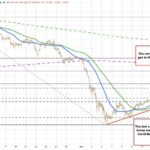
Bitcoin (BTC) experienced notable volatility as trading commenced on Wall Street Monday, primarily influenced by escalating tensions in the Middle East following Iranian military actions. Data indicated that BTC was hovering around the critical $80,000 threshold, becoming a focal point for traders on both sides of the market.
News reports revealed that Iran conducted a strike on a petroleum facility in the United Arab Emirates, leading to a surge in oil prices. West Texas Intermediate (WTI) crude increased by over 5%, surpassing $105 per barrel, while Brent crude approached $119 per barrel, nearing its highest levels in nearly three years. This geopolitical tension significantly impacted U.S. stock markets, adding to overall market instability.
In light of these developments, trading company QCP Capital described the geopolitical situation as “fluid,” noting that the financial markets seemed to be factoring in a potential de-escalation at present, although this could swiftly change.
For Bitcoin specifically, QCP highlighted a semi-filled gap in CME Group’s futures market as a key resistance level that buyers needed to breach. Market analysts pointed out that the new CME gap could serve as a magnet for traders, potentially acting as a local reversal zone for the cryptocurrency as it attempts to navigate these recent price fluctuations.
Another layer of analysis came from on-chain analytics platform CryptoQuant, which focused on the cost basis of Bitcoin’s short-term holders—those who typically retain their investments for less than six months. The platform’s contributions indicated a cautious expectation of recovery, suggesting that a confirmed daily close above $81,500 could convert that level from resistance to support. This could pave the way for Bitcoin prices to potentially reach the $87,000 to $92,000 range. Conversely, a failure to secure this close could see the price revert to test new support levels around $76,500.
Despite the fluctuations, long-term Bitcoin holders appear largely unfazed, maintaining an average unrealized loss of approximately 27%. This group seems to be holding steady amid the uncertainty, while short-term speculators are closely monitoring market movements to mitigate their unrealized losses. As the situation unfolds, the interplay between geopolitical tensions and market reactions will likely continue to shape Bitcoin’s trajectory in the near term.