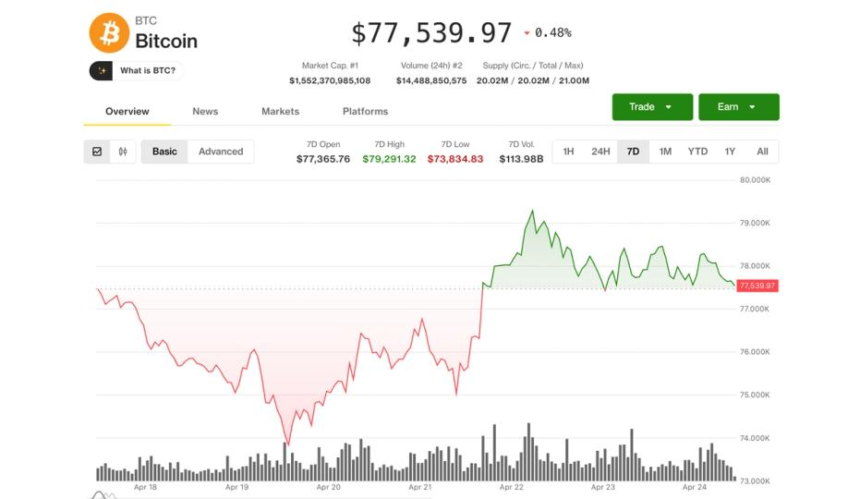
Bitcoin maintains a robust position above $77,000, trading at approximately $77,579.10 on Friday. This consolidation follows a peak earlier in the week, representing its strongest value since early February. Over the course of April, Bitcoin has seen an impressive increase of about 13.6%, potentially marking its best monthly performance in a year, as reported by CoinGlass.
This resurgence comes after a challenging period for the cryptocurrency market, which faced its longest stretch of consecutive monthly declines since 2018, starting from October and continuing through February. The turnaround is coinciding with improved conditions in the broader macroeconomic landscape. U.S. equity markets, particularly the S&P 500 and Nasdaq, have shown significant recovery, rebounding toward record highs after a brief period of correction.
A crucial contributor to Bitcoin’s rise is the notable increase in the supply of Tether’s USDT, the leading stablecoin, which has surged to nearly $150 billion. There has been an addition of approximately $5 billion in the past two weeks alone, signaling a positive shift after months of stagnation. Analysts view this growth in stablecoins—cryptocurrencies pegged to fiat currencies like the U.S. dollar—as a sign of increasing liquidity in crypto markets, suggesting a healthy flow of capital into digital assets.
Despite this upward movement, the macroeconomic backdrop remains complex. Geopolitical uncertainties, particularly surrounding the ongoing conflict in Iran, continue to affect oil prices, keeping them elevated. Nonetheless, sentiment in the markets seems to be shifting. Jasper de Maere, an OTC trader at Wintermute, remarked that cryptocurrencies and equities appear to show diminishing reactions to headlines about the conflict. This signifies a degree of fatigue and possible complacency among investors, where strong corporate earnings and resilient equity performances are helping to offset the risks posed by rising energy costs.
As Bitcoin hovers at the upper end of its trading range, the $79,000 mark has emerged as a significant resistance level. Traders have begun to take profits at this benchmark, which holds importance due to the substantial institutional selling pressure above it. Adam Haeems, head of asset management at Tesseract Group, explained that whether Bitcoin can break through this barrier will depend on the nature of the buying impetus. If the momentum is driven primarily by short covering, it might dissipate quickly; however, a breakout supported by sustained institutional demand could indicate a more significant and lasting shift in market dynamics.
The upcoming April Fed meeting presents another critical test for Bitcoin’s current rally, as market participants seek indicators of future direction. Should ETF inflows persist leading up to the meeting, there is potential for the $79,000 level to convert from a point of resistance to one of support, creating opportunities for a higher trading range. Conversely, if these inflows diminish, Bitcoin may retreat to the established range between $75,000 and $77,000.