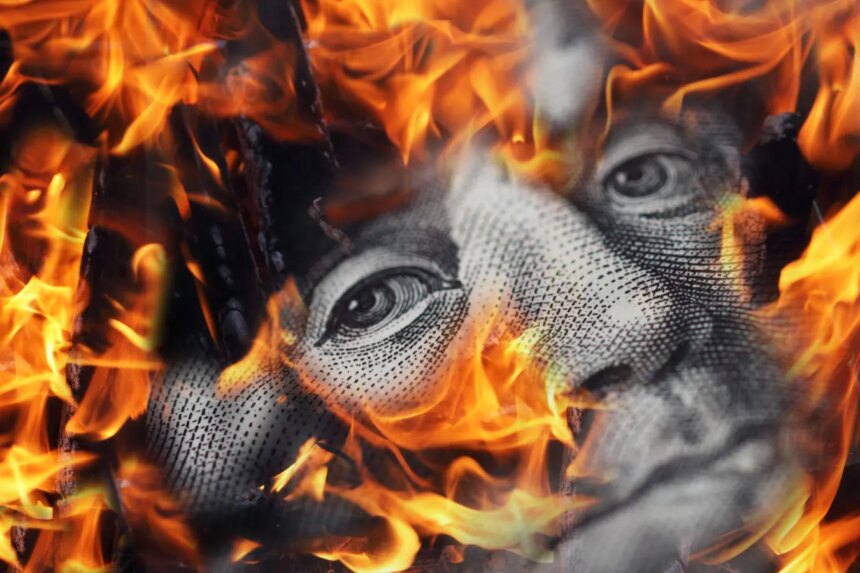
Bitcoin has experienced a remarkable surge, rising by 30% since the onset of the U.S. conflict in Iran. Despite this substantial increase, the cryptocurrency’s price remains significantly lower than its 2025 peak of $126,000 per bitcoin. This volatility comes as U.S. Secretary of War Pete Hegseth indicated that China may be accumulating bitcoin in secret.
Traders are currently anticipating a major announcement from the White House that could alter the landscape for bitcoin. Amid this uncertainty, billionaire investor Ray Dalio has issued a warning concerning the U.S. dollar, suggesting it is on the verge of collapse. This comes as analysts from JPMorgan project a significant shift of investment from gold to bitcoin, indicating changing perceptions in the market.
Dalio, the founder of Bridgewater Associates, highlighted the U.S. government’s financial struggles, stating that the country is operating with a deficit of approximately $2 trillion, spending 40% more than it earns. He pointed to the excessive national debt, now exceeding $39 trillion, exacerbated by government spending during the pandemic. Dalio noted that historical patterns show all fiat currencies depreciate under similar economic pressures, while gold tends to appreciate.
He expressed concern that a future financial crisis could severely limit the government’s spending capacity. “I don’t think any of the fiat currencies will be effective storeholds of wealth,” he added, reinforcing his position that both gold and the dollar are at risk.
In tandem with Dalio’s warnings, JPMorgan has recognized a shift in the investment landscape, with their analysts observing a trend of investors moving funds from gold to bitcoin. They described bitcoin as “digital gold” due to its capped supply and stable nature. The rise in bitcoin exchange-traded funds (ETFs) has also started to outpace those of gold, indicating a broader acceptance of bitcoin.
Previously, billionaire investor Stanley Druckenmiller forecasted that within 50 years, the dollar may lose its status as the world’s reserve currency, potentially supplanted by cryptocurrencies. He described the current state of the dollar as a “debt bomb,” expressing skepticism about its longevity as a reserve. Similarly, Elon Musk has hinted at a post-fiat currency world, suggesting that energy could emerge as the true currency, further igniting speculation about his potential endorsement of bitcoin.
Additionally, former Federal Reserve Chair Janet Yellen has voiced concerns that former President Trump’s policies might lead the dollar toward hyperinflation, a development that could further elevate bitcoin’s standing in the financial landscape. As these dynamics unfold, the intersection of geopolitical tensions and economic indicators continues to shape the future of cryptocurrencies and their role in the global economy.