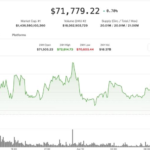
Google searches in the United States for the term “bitcoin zero” reached an unprecedented high of 100 on the relative interest scale in February, reflecting growing concerns amongst investors as Bitcoin’s price tumbled from its peak of $68,246.73 towards the $60,000 mark. This dip follows a staggering 50% decline from its all-time high achieved in October. The surge in searches could be interpreted as a signal of widespread capitulation among retail investors, possibly indicating a contrarian buying opportunity. Historically, similar spikes in search interest during 2021 and 2022 aligned with local price lows for Bitcoin.
However, a broader perspective reveals a striking contrast in global search trends. While U.S. interest peaked in February, worldwide searches for the same term had already reached a high of 100 in August, plummeting to just 38 this month. This declining global trend suggests that fear surrounding Bitcoin may be more pronounced in the U.S. than elsewhere, indicating that the current panic is more localized. This observation supports the notion that U.S.-specific economic factors — including tariff escalations, tensions with Iran, and a shift toward risk-averse investments in domestic equities — have significantly influenced the current market narrative.
Moreover, it appears that retail investors in the U.S. are reacting with heightened sensitivity to these news developments, contrasting with investors in Asia and Europe, where Bitcoin’s price drop coincides with a different economic backdrop that may not evoke the same level of concern.
It’s also essential to clarify how Google Trends operates; it does not provide raw search volume data. Instead, it rates interest on a relative scale of 0 to 100, where 100 indicates a term’s peak interest within the chosen timeframe. Therefore, a score of 100 in February 2026 could reflect heightened interest relative to a larger user base compared to the smaller audience present during the 2022 bear market. This distinction means that while fear among U.S. retail investors is evidently rising, the implications of these search trends might not hold the same significance when viewed through a global lens, which is presently cooling.
In summary, while the surge in “bitcoin zero” searches highlights an intensified state of concern among U.S. investors, it may not act as a definitive predictor of a trend reversal, especially amidst declining global interest and differing regional dynamics. The anxiety and search interest are present, but context is key in interpreting the potential impacts on Bitcoin’s market trajectory.