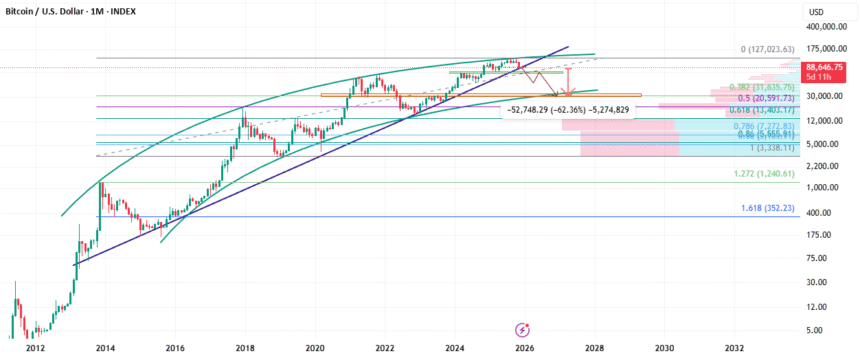
In recent discussions surrounding Bitcoin, a topic that has garnered considerable attention is the complexity of its correlations with various asset classes. Over the years, Bitcoin has often been likened to gold, oil, stocks, and even the US dollar. However, analysts emphasize that attempting to find static relationships within a dynamic market can lead to misleading conclusions.
The widely accepted notion of Bitcoin as “digital gold” has its merits, yet the reality proves to be far more nuanced. Historically, the correlation between Bitcoin (BTC) and gold has been inconsistent, with periods where they move in tandem and others where they diverge significantly. Gold is traditionally associated with capital preservation, while Bitcoin’s fluctuations are more heavily influenced by liquidity and market appetite for risk. In scenarios of inflation or currency debasement, Bitcoin has been known to mimic gold’s behavior, yet during significant liquidity crises, gold tends to demonstrate greater resilience.
Turning to the relationship between Bitcoin and oil, there appears to be no direct correlation. While fluctuations in oil prices can raise inflation expectations and lead central banks to implement tighter monetary policies—which adversely impacts risk assets, including cryptocurrencies—oil itself is not a primary driver of Bitcoin’s market movements.
Another noteworthy comparison is between Bitcoin and the US Dollar Index (DXY). This relationship is considered one of the more straightforward macro factors: typically, a strong dollar puts pressure on Bitcoin prices, whereas a weak dollar offers relief. The rising DXY generally indicates tighter global liquidity conditions, an area where Bitcoin proves to be particularly sensitive. Traders who disregard the influence of the DXY may overlook critical indicators that affect the cryptocurrency market.
Furthermore, the correlation between Bitcoin and the stock market, particularly with tech equities like those found in the Nasdaq, has evolved over the years. Before 2020, Bitcoin maintained a relatively low correlation with stocks, trading independently. However, the period from 2020 to 2022 saw an influx of liquidity that aligned Bitcoin’s movements closely with high-beta risk assets such as tech stocks. As liquidity surged, so did Bitcoin’s price; conversely, when liquidity tightened, Bitcoin, like other risk assets, experienced declines.
Since 2023, this correlation has eased, indicating that Bitcoin is attempting to establish a degree of independence within the market; however, it is still a significant player in the risk asset ecosystem.
Ultimately, Bitcoin’s behavior appears to be influenced primarily by macroeconomic factors such as liquidity, interest rates, the strength of the dollar, and overall risk sentiment. In turbulent market conditions, correlations tend to strengthen, while in stable environments, narratives predominate.
As the trading landscape for Bitcoin continues to evolve, the key takeaway is that it should not be pigeonholed into a single category. It is neither gold nor merely a stock. Instead, Bitcoin functions as a macro-sensitive asset with its own unique drivers. Traders are encouraged to shift their approach by focusing less on fixed correlations and more on understanding the broader economic indicators shaping Bitcoin’s price movements.