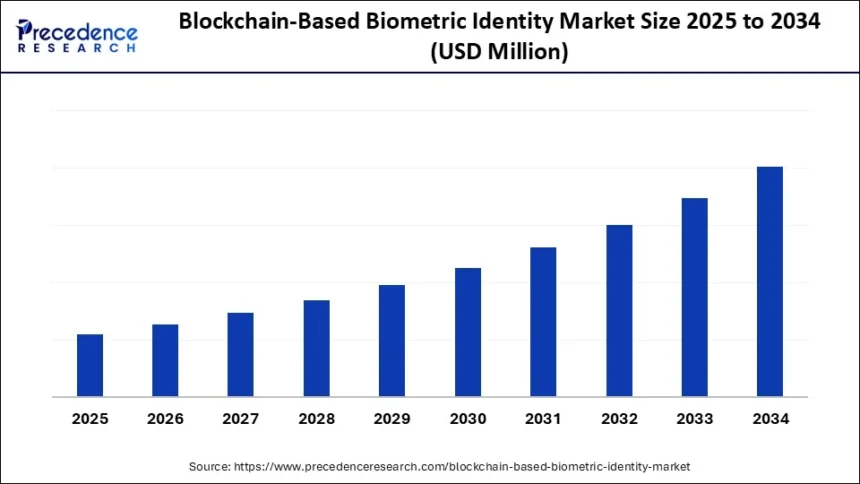
The blockchain-based biometric identity market is currently experiencing transformative growth by marrying the features of blockchain technology with biometric authentication methods. This innovative combination aims to provide secure, tamper-proof identity verification that effectively mitigates fraud across diverse sectors, including banking, government, and healthcare. The surge in security concerns has elevated the demand for advanced blockchain identity management solutions, driving this market’s expansion.
In 2024, the Asia Pacific region emerged as the dominant player, accounting for a significant 34% market share. The Middle East and Africa are forecasted to exhibit the fastest compound annual growth rate (CAGR) during the impending decade. Within the market components, software led with a share of 48%, while the services segment is expected to witness brisk growth. Notably, the system integration service captured 32% of the market share, emphasizing the critical need for organizations to combine complex biometric systems with blockchain technology. Furthermore, fingerprint biometrics represented 33% of market share among modalities, while behavioral biometrics is anticipated to grow at a fast pace in the coming years.
Cloud-based deployment models dominated in 2024, generating a massive 44% market share, reflecting their cost-effectiveness and ease of management. The hybrid model, which amalgamates the benefits of both public and private blockchains, is projected for rapid expansion, catering to sectors that require tailored identity solutions.
A key driver for growth in this market is the escalating dependence on digital services, prompting a strong demand for effective identity verification methods designed to counteract the rising incidences of identity theft and fraud. The integration of biometric technologies with blockchain-based solutions has been accelerated by the growing use of biometric devices, which provide a user-friendly and secure means of authentication. Additionally, the increasing global awareness of privacy issues has led to greater demand for self-sovereign identity solutions powered by blockchain.
Artificial intelligence is playing a pivotal role in enhancing the capabilities of blockchain-based biometric systems. By employing advanced fraud detection techniques and anomaly tracking, AI improves reliability and precision in biometric systems. Machine learning algorithms continuously analyze blockchain transactions to detect fraudulent patterns, adapting to new tactics over time. Furthermore, AI integration with smart contracts automates identity verification processes and ensures compliance with regulations.
Despite the promising outlook, the blockchain-based biometric identity market faces challenges such as scalability issues, including limited transaction throughput and high costs associated with storing extensive volumes of biometric data. However, there lies significant opportunity in developing advanced solutions that can seamlessly integrate with existing legacy systems, leveraging blockchain-as-a-service (BaaS) to expand adoption across various sectors.
In terms of specific components, the software segment emerged on top in 2024 due to its scalability and flexibility, aiding organizations in creating tailored identity management systems. As the landscape of identity management evolves, businesses increasingly require expertise to navigate the complexities of advanced solutions, boosting demand for professional services.
The government and public sector continue to lead market share due to the need for enhanced security measures to prevent identity fraud and cyber threats. Governments are utilizing blockchain-based biometric systems to secure national identification, enhance law enforcement capabilities, and streamline public service delivery. In the healthcare sector, the demand for secure electronic health records is fueling adoption as organizations strive to protect sensitive patient data.
Regionally, Asia Pacific’s growth is spurred by a rapid digitalization pace, government-backed initiatives like India’s Aadhaar program, and smart city projects that bolster the demand for secure digital identities. Meanwhile, the Middle East and Africa are leveraging blockchain’s promise to facilitate digital transformation, combat fraud, and enhance transparency in digital services.
In recent developments, notable partnerships and technological advancements are emerging. Companies like Prenetics Global Limited and NEC Corporation are pioneering cutting-edge solutions that bolster blockchain-based identity verification while addressing privacy concerns. Such advancements promise to solidify the market’s trajectory in the coming years, marking an exciting frontier for secure identity management technologies.