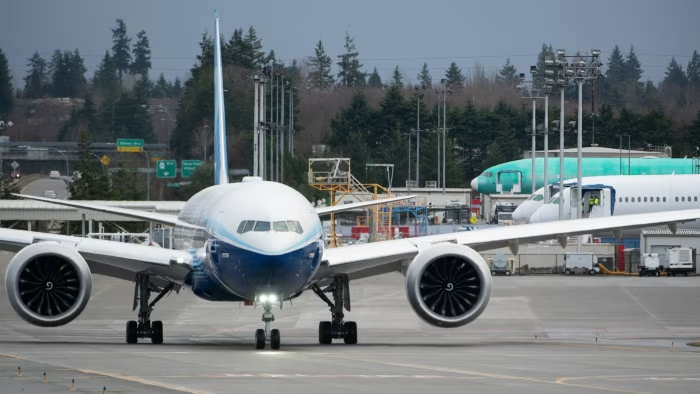
Boeing has announced a significant $4.9 billion charge due to delays in the rollout of its next-generation 777X jet, overshadowing what was otherwise an improved financial performance for the company in the third quarter. Chief Executive Kelly Ortberg revealed that the first commercial delivery of the 777X has now been delayed until 2027, a setback considering the jet was originally scheduled to enter service in 2020. The delays have been compounded by challenges in obtaining certification from federal aviation regulators.
This hefty charge contributed to a reported net loss of $5.3 billion for the quarter, although this represents an improvement from a loss of $6.2 billion during the same period last year. Revenue surged by 30 percent to $23.3 billion, surpassing Wall Street expectations.
Despite the setbacks regarding the 777X, Boeing’s commercial airplanes division showed resilience. The unit, which constitutes nearly half of Boeing’s total revenue, delivered 160 jets in the three months leading up to September 30, the highest quarterly output since 2018.
A potential upswing for Boeing could emerge from China, which has not placed significant orders with the aviation giant since 2017. Speculation is high that recent diplomatic discussions—particularly a meeting between U.S. President Donald Trump and Chinese President Xi Jinping—could improve trade relations between the two nations and open the door for new business opportunities with Boeing. Ortberg expressed optimism in a CNBC interview, emphasizing the importance of positive trade negotiations for future orders.
In a more encouraging development, the Federal Aviation Authority recently granted Boeing approval to increase its production of the 737 Max to 42 aircraft per month. Production had been limited to 38 per month due to past incidents involving the aircraft, including fatal crashes in 2018 and 2019, alongside regulatory concerns following a safety issue earlier this year. An increase in production is expected to enhance Boeing’s cash flow, a crucial focus for shareholders as the company aims to fund new aircraft development.
Signs of recovery in Boeing’s cash position were reflected in the report, with the company citing a positive free cash flow of $238 million for the third quarter, marking the first time this metric has been positive since late 2023. Last year, Boeing faced a significant cash drain, losing over $14 billion due to a major workforce strike and production restrictions.
In a letter to employees, Ortberg acknowledged disappointment over the 777X schedule delay but emphasized the aircraft’s strong performance in flight testing. He reaffirmed the company’s commitment to stabilize operations and restore trust among stakeholders. Following the announcement, Boeing’s shares saw a decline of 4 percent, yet the stock remains up approximately 22 percent year-to-date, outperforming the broader S&P 500 index.