Former FTX US president Brett Harrison has raised serious concerns about the high leverage offered by cryptocurrency exchanges, calling it “irresponsible” and indicative of a significant problem within the market. His comments come as he prepares to launch Architect, a new perpetual futures exchange that will not feature cryptocurrency assets, focusing instead on traditional assets such as stocks and foreign exchange.
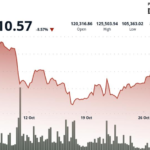
Harrison criticizes the trend of offering leverage as high as 1,001x on volatile cryptocurrencies, suggesting that such practices encourage reckless trading behavior that could lead to considerable financial losses for retail investors. His stance mirrors ongoing apprehensions from analysts following a recent flash crash in the crypto market, which saw roughly $19 billion wiped from the derivatives market in a short span.
Architect aims to create a more controlled trading environment, featuring a maximum leverage of 25x on less volatile assets, while even lower leverage—up to 8x—will be applied to more volatile stocks like Tesla. In contrast, the cryptocurrency derivatives market routinely offers extreme leverage, attracting users but also increasing the risk of rapid liquidation of positions.
According to Harrison, perpetual futures can be beneficial when used correctly. They allow traders to engage in leveraged positions to hedge against risks or speculate on price movements without an expiration date. However, he warns that the excessive leverage seen in crypto markets creates an environment more akin to gambling, rather than responsible trading.
While Harrison’s platform is set to welcome institutional investors first, retail access will follow, prioritizing stability and risk management. Unlike typical centralized exchanges, where users must undergo know-your-customer (KYC) protocols, decentralized exchanges allow for easier access to high-leverage trades. This accessibility has fueled the popularity of high-leverage options among retail investors, with proponents arguing that it’s democratizing trading.
Despite this, Harrison stresses that without stringent measures to mitigate risks associated with excessive leverage, the potential for “liquidation cascades” remains high, which could lead to further turmoil in the crypto market. Daily trading volume in perpetual futures for cryptocurrencies has reached $1.3 trillion, underscoring the massive stakes involved. However, Harrison’s emphasis on a more responsible trading approach signals a potential shift in how derivatives trading could evolve in light of these rising concerns.