During a recent trial, diary entries spanning from 2015 to 2023 were presented as key evidence, shedding light on the evolving dynamics within OpenAI and its leadership. The entries document a period that includes significant turmoil leading to the temporary ousting of both Brockman, an executive at OpenAI, and CEO Sam Altman, driven by safety concerns raised by the board.
Elon Musk, co-founder of OpenAI, is reportedly aiming to portray Brockman as primarily driven by a desire for profit, suggesting that he was indifferent to the organization’s original mission. However, Brockman’s legal team is working to counter this narrative, asserting instead that the diary entries reflect a profound commitment to the values and objectives of OpenAI.
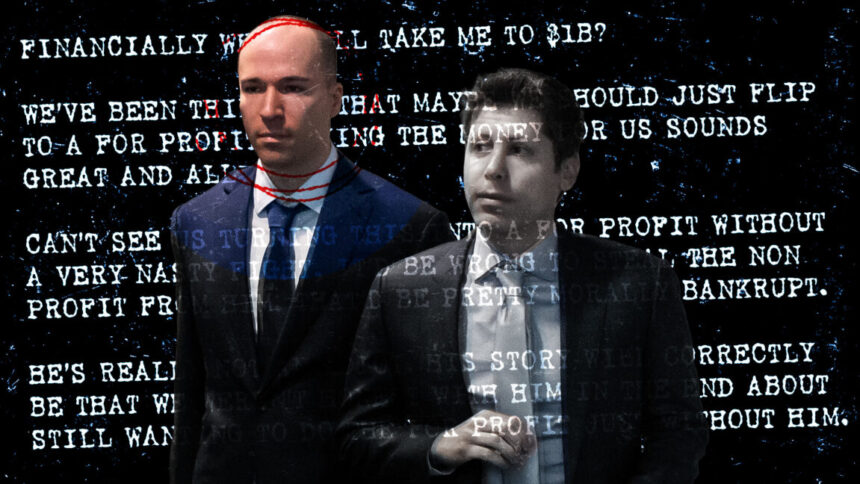
In a pointed examination, Musk’s attorney, Steven Molo, delved into specific entries, questioning Brockman’s motivations and highlighting what he characterized as signs of greed. One particularly revealing entry from 2017 expressed Brockman’s contemplation of shifting OpenAI to a for-profit model, coinciding with Musk’s ultimatum regarding control over OpenAI’s business direction. In his writings, Brockman mused about the financial benefits of a for-profit structure, stating, “Making the money for us sounds great and all,” which Molo leveraged as a basis for his argument.
Brockman’s financial success became a central theme of Molo’s line of questioning. Following the establishment of a for-profit division in 2018, Brockman’s financial stake reportedly ballooned to around $30 billion. The attorney repeatedly pressed Brockman for justifications regarding his wealth, referencing another diary entry in which Brockman asserted that his ultimate career goal was to accumulate $1 billion.
In an intense exchange, Molo asked whether Brockman would consider returning a portion of his earnings to the nonprofit sector, to which Brockman firmly declined. He clarified that he acquired his stake well before the significant increase in OpenAI’s valuation following the release of ChatGPT and argued that he played a vital role in establishing the organization as the best-funded nonprofit globally.
The attorney’s portrayal of Brockman as akin to a “bank robber,” who minimizes a theft due to the remaining abundance in the bank, underscores the heightened tensions surrounding issues of ethics and profit within the rapidly evolving tech landscape. As the trial progresses, Brockman faces the task of reshaping his image from that of a money-driven executive to a dedicated custodian of OpenAI’s foundational mission.