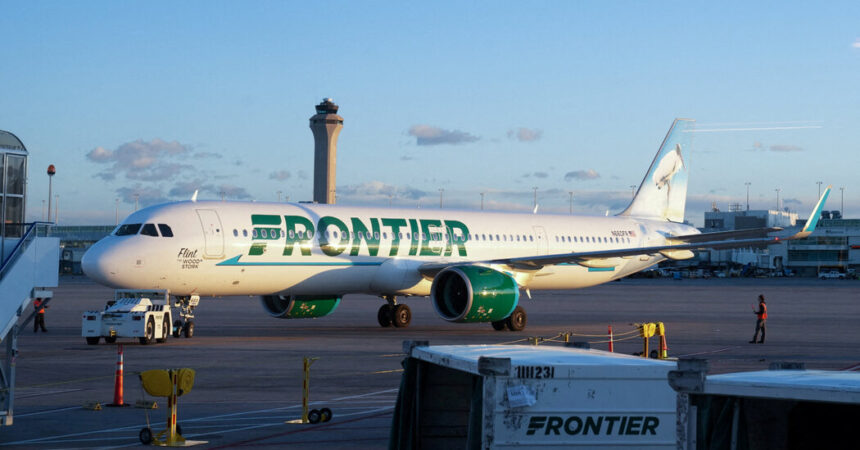
A trade group representing low-cost airlines has formally requested $2.5 billion from the Trump administration to alleviate rising fuel costs exacerbated by the ongoing conflict in Iran. Jet fuel prices in North America have surged to approximately $4.10 a gallon, marking an 88 percent increase compared to the same period last year. This dramatic hike has compelled many airlines to raise ticket prices.
The Association of Value Airlines, which advocates for low-cost carriers, emphasized in a statement that the nearly 100 percent increase in fuel prices since February has put immense financial strain on value airlines. The group described the proposed $2.5 billion as a “liquidity pool” that would be allocated solely for offsetting additional fuel expenses, aiming to stabilize operations and maintain affordable airfares during this volatile period.
In parallel, Spirit Airlines, a member of the trade group, is reportedly in discussions to secure a loan of up to $500 million from the government. This financial arrangement may grant the government options to acquire ownership stakes in Spirit through warrants, potentially leading to the government possessing as much as 90 percent of the airline, which is currently navigating its second bankruptcy in two years. During a recent bankruptcy court session, Spirit’s attorney, Marshall Huebner, underscored the urgency of these negotiations, warning that the airline’s available cash is dwindling rapidly. Huebner also indicated his efforts to engage with Spirit’s creditors concerning the structure of the proposed government deal, which would prioritize the government’s claim over the airline’s assets compared to existing loans from other lenders.
A representative from the Department of Transportation directed inquiries regarding the budget airlines’ request to the White House. Kush Desai, a White House spokesman, acknowledged that the administration is aware of the trade group’s outreach and is monitoring the aviation industry’s status closely. However, he dismissed the notion of a specific deal at this time.
The trade group, which also includes Allegiant Air, Avelo Airlines, Frontier Airlines, and Sun Country Airlines, has been lobbying Congress for additional emergency measures, including a temporary waiver of a 7.5 percent excise tax and a $5.30 fee per passenger. While these fees are commonly included in ticket pricing and contribute to a federal aviation fund, it remains uncertain whether these proposals will gain traction.
The appeal for $2.5 billion is characterized by the budget airlines’ group as essential “temporary government support to preserve vital industry competition,” drawing a parallel to the multi-billion-dollar assistance package that Congress approved for airlines during the COVID-19 pandemic. However, that aid was primarily directed at major airlines, not specifically low-cost carriers. Notably, major airlines have not aligned themselves with the relief request from budget airlines, raising questions about the urgency of the financial needs of all the carriers involved.
Skepticism among lawmakers and administration officials persists over the necessity of additional funds for the budget airlines, especially given that, aside from Spirit Airlines, other carriers do not appear to be facing critical financial challenges. The ongoing negotiations regarding Spirit’s potential loan have received mixed reactions within the Trump administration. Secretary of Commerce Howard Lutnick has been a proponent of the deal, whereas Transportation Secretary Sean Duffy has raised concerns about the viability of further investment in a company that has struggled to achieve profitability.
Finalizing any agreement with Spirit may pose challenges, particularly without legislative approval, as bipartisan opposition to a bailout has emerged. Senator Ted Cruz, the Republican chair of the aviation oversight committee, denounced the proposed financial assistance as “an absolutely TERRIBLE idea.” Meanwhile, Senator Elizabeth Warren has criticized the administration’s move, linking the failed economic condition of Spirit Airline to the trucking price crisis stemming from the conflict in Iran. Her remarks highlight broader questions about the implications of such taxpayer-funded bailouts.
Experts suggest that without Congressional support, the administration may face significant hurdles in crafting a deal with Spirit. One potential avenue under consideration involves the utilization of the Defense Production Act, which would necessitate a determination that aiding Spirit serves national security interests.