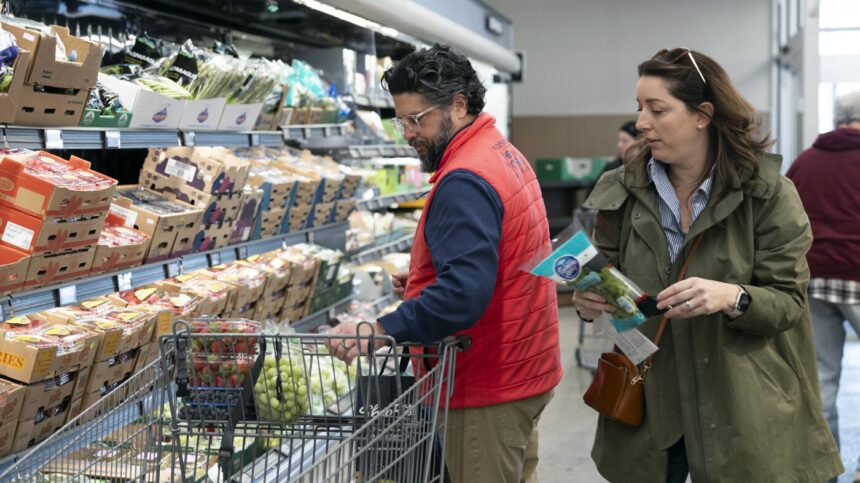
In Bellmawr, New Jersey, the grocery shopping landscape has shifted dramatically, particularly for families seeking affordable options in the aftermath of the COVID-19 pandemic. Rachel Negro-Henderson, a healthcare administrator, shared her experience transitioning to regular shopping at Aldi after her husband, a crew coach, lost his income. Initially, she faced awkward encounters with acquaintances at the store, as people seemed reluctant to discuss their reasons for shopping there. However, as time progressed, these interactions transformed into a shared acknowledgment of the necessity to seek savings amidst rising grocery prices.
Negro-Henderson and her family, like many others, felt the weight of soaring food costs, exacerbated by factors such as inflation, pandemic-induced economic strain, and corporate practices like shrinkflation. “Consumers are just to a point where [they’re saying], ‘Give us a break,'” remarked grocery industry analyst Phil Lempert, capturing the frustrations of many shoppers.
This climate of increased economic pressure has led many families to embrace discount grocery stores and warehouse clubs. Social media has become a platform where shoppers share their budget-friendly finds and meal preparation tips, highlighting the shift in priorities toward cost-conscious shopping.
Budget grocery chains, particularly Aldi and Lidl, have successfully enhanced their reputations by improving product quality and expanding their appeal to a broader customer base. According to Lempert, these stores often operate on smaller footprints than traditional supermarkets, enabling them to maintain lower operating costs and streamline inventory processes—an approach exemplified by Aldi’s method of placing shipping boxes directly onto store shelves.
The expansion of these discount chains has been significant, with Aldi reporting the acquisition of 17 million new U.S. customers last year and plans to open 180 more stores this year. In contrast, some other chains like Grocery Outlet are closing locations after rapid expansion led to overextension.
Warehouse clubs, such as Costco and Sam’s Club, also play a vital role in the changing grocery landscape. Their bulk purchasing capabilities allow them to offer competitive prices on groceries, and Costco reported an impressive net sale increase, reflecting consumer appetite for value.
Recent data from Consumer Reports substantiates claims about lower prices at budget retailers; Aldi and Lidl were found to be over 8% cheaper than Walmart, with other clubs like BJ’s and Costco boasting even greater savings. As a result, store-brand items have surged in popularity, with sales growing at nearly three times the rate of national brands, emphasizing a shift in consumer preferences.
While budget grocery shopping has its drawbacks—such as limited product variety—many consumers find the trade-off worthwhile. Negro-Henderson, who appreciates Aldi’s low prices and sustainability practices, acknowledges that she sometimes makes additional trips to other stores for items she cannot find at Aldi. Nonetheless, she maintains that the quality of Aldi’s products has exceeded her expectations.
Social media influencers like Kiki Rough have emerged as sources of inspiration for budget cooking, creating an online movement around thrifty meal preparation. Rough, who personally struggled with food insecurity, encourages a shift in mindset for those facing financial challenges, emphasizing that there’s no shame in necessity.
As the realities of a tightening economy persist, experts like Lempert predict that frugal grocery habits are here to stay. Surveys reveal that consumers are increasingly focused on budgeting and avoiding impulsive purchases. The younger generations, including millennials and Generation Z, demonstrate a marked shift in shopping preferences, prioritizing value over the traditional comforts of full-service grocery experiences.
Lempert predicts, “We’re never going to go back to shopping the old way,” suggesting a fundamental transformation in consumer behavior that will define the future of grocery shopping. As families navigate this new normal, the adaptability and resilience seen in communities across the country will likely continue to shape their grocery choices for years to come.