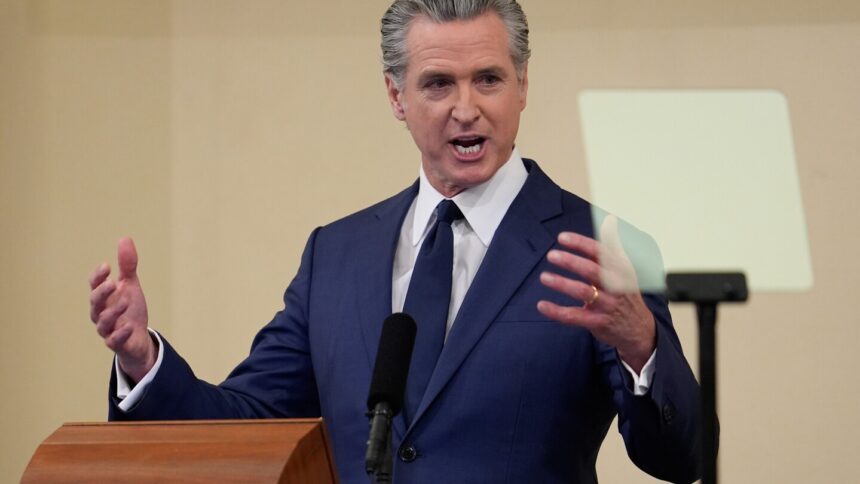
A proposed billionaires’ tax in California has sparked intense debate and political contention, particularly among Silicon Valley elites who are considering relocating due to its potential ramifications. Democratic Governor Gavin Newsom, aware of California’s standing as a financial stronghold with a significant portion of its budget reliant on the top 1% of earners, is actively seeking to thwart a one-time 5% tax on billionaire assets that could impact wealth amassed through stocks, art, businesses, and intellectual property.
The initiative is backed by a major health care union aiming to restore funding cuts to health services that occurred under the Trump administration. Given California’s stark economic disparities, the proposal has stirred divisions within both major political parties, with leaders grappling to address the economic hardships facing citizens as inflation rises ahead of midterm elections.
An online battle has erupted among tech magnates, with substantial financial contributions flowing to political committees opposing the tax—most notably, a $3 million donation from billionaire Peter Thiel. However, the proposal’s future remains uncertain, as it requires over 870,000 signatures to qualify for the ballot.
The tax would target a small portion of California’s nearly 39 million residents but is projected to draw significant wealth from the state’s billionaires, some of whom are among the wealthiest individuals globally. The challenge lies in accurately determining residency status for these wealthy individuals, many of whom own properties in multiple states.
Concerns about the proposed tax are echoed by Aaron Levie, CEO of Box, who warns it could deter potential entrepreneurs from launching their ventures in California. Even those in the tech sector who may identify with progressive social causes find the tax economically untenable.
Governor Newsom has consistently voiced opposition to wealth taxes, fearing they could place California at a competitive disadvantage. With a looming budget deficit, he views a potential exodus of billionaires as a threat, estimating it could result in multi-million dollar losses in tax revenue. Experts suggest that this tax might complicate Newsom’s path to a presidential bid, especially as he navigates internal party divisions on the issue.
Prominent Democrats, including Senator Bernie Sanders, support the tax as a remedy for economic inequality, arguing that such measures are necessary for social welfare. Rep. Ro Khanna sarcastically dismissed billionaire threats to leave over a tax intended to improve health care access for low-income individuals.
The Service Employees International Union, which is spearheading the tax proposal, argues that the fears regarding an exodus are overstated. They believe the tax is a sensible response to funding shortfalls created by federal decisions. In contrast, organizations like the California Business Roundtable warn that the levy could exacerbate economic challenges and deter investment in the state.
The discussion around California’s business environment has been further strained amid a backdrop of high living costs and regulatory scrutiny. Notably, some of Silicon Valley’s leading figures, including Elon Musk, who has relocated Tesla to Texas, and Google co-founders Larry Page and Sergey Brin, are reportedly shifting more of their financial interests out of California. These developments suggest that the tech industry is increasingly wary of California’s political climate and its implications for future growth and innovation.