Cardano’s founder, Charles Hoskinson, has sparked renewed discussion regarding the value dynamics within the XRP ecosystem. He contended that XRP holders do not possess any stake in Ripple’s evolving business venture. His remarks come at a time when Cardano is actively working to incorporate XRP into its decentralized finance (DeFi) offerings, allowing users to trade, lend, and borrow the token on-chain.
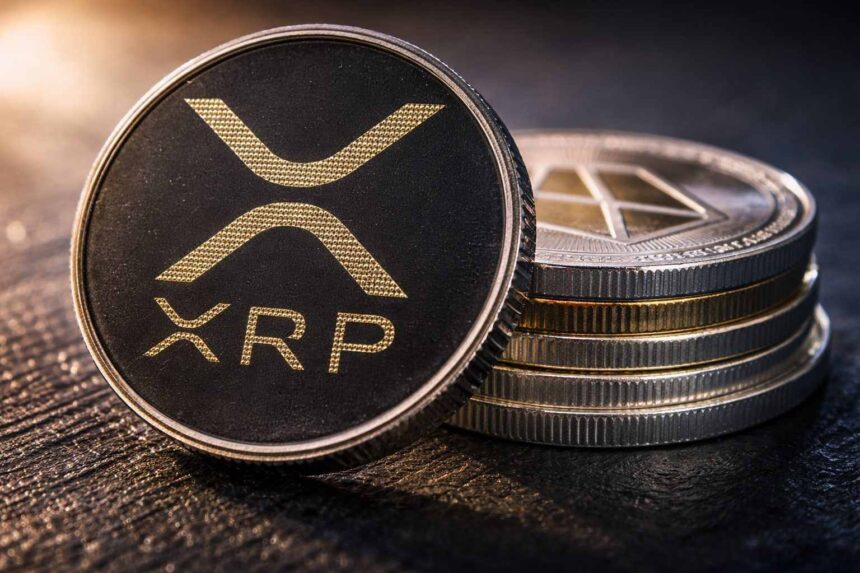
Currently, XRP is priced at approximately $1.43, maintaining its position as the fourth-largest cryptocurrency by market capitalization. Ripple has been rapidly expanding its services around XRP, introducing solutions such as prime brokerage, custody, and treasury tools tailored for corporate cash and digital assets. This situation raises important questions for investors: Where do the revenues generated by Ripple actually flow?
In a discussion with crypto commentator Wendy O, Hoskinson emphasized that “XRP holders have no legal ownership of those assets.” He pointed out that while Ripple generates profits, there is no mechanism for buybacks or income distribution to XRP holders. He drew a parallel to Tether, where users gain from the platform’s utility but do not partake in the financial growth of the company.
Ripple’s corporate disclosures provide limited clarity but reinforce the notion that the company and its token exist as separate entities. Notably, a submission to the U.S. Securities and Exchange Commission regarding a potential XRP ETF by 21Shares clearly stated that holding XRP does not grant any claim to Ripple’s earnings or income.
The historical context concerning XRP’s supply further complicates matters. Bitwise’s recent filings indicate that the total supply of XRPs, capped at 100 billion, was created upfront; with 20 billion allocated to founders and nearly 80 billion retained by Ripple Labs. Hoskinson emphasized this point, arguing that Ripple’s substantial control over the initial XRP supply undermines any direct connection between the company’s market valuation and the ownership of XRP tokens.
Ripple’s growth is not mere conjecture; in April 2025, it secured a $1.25 billion acquisition of Hidden Road, positioning itself uniquely among crypto firms with a comprehensive global multi-asset prime brokerage platform. This development allows Ripple to offer services like clearing, securities lending, and leveraged trading specifically for institutional clients. Additionally, Ripple previously acquired Swiss custody firm Metaco for $250 million and recently launched treasury software aimed at facilitating management of both fiat and crypto.
Recent reports suggest that Ripple’s acquisition of Hidden Road strengthens RLUSD, its dollar-backed stablecoin, reinforcing its standing in a market dominated by competitors like Tether and Circle’s USD Coin. This context supports Hoskinson’s argument: Ripple continues to build revenue-generating operations that aren’t exclusively linked to the value of its token.
In response to interest from XRP holders, Hoskinson briefly confirmed Cardano’s plans for integrating XRP into its DeFi ecosystem, although he simultaneously questioned the true decentralization of a system that can be influenced by a single individual’s actions.
Meanwhile, the competitive landscape is shifting, with Solana launching wXRP, a wrapped version of XRP, enabling its functionality on that blockchain. RippleX has acknowledged this development, with CEO Brad Garlinghouse commenting on the growing demand for $XRP that enhances liquidity across different chains, framing this as an expansion of XRP rather than a diversion.
Although Cardano has yet to announce a launch date for its XRP integration, the project remains in development. Wrapped assets require reliable custody and interoperability frameworks, and the technical execution involved carries its own risks.
As Ripple continues to onboard new businesses connected to XRP, questions linger over who truly profits from Ripple’s growth: the shareholders or the XRP token holders. With XRP’s current value stabilizing around $1.43, the ongoing discourse surrounding ownership and benefit distribution in the Ripple ecosystem is likely to persist.