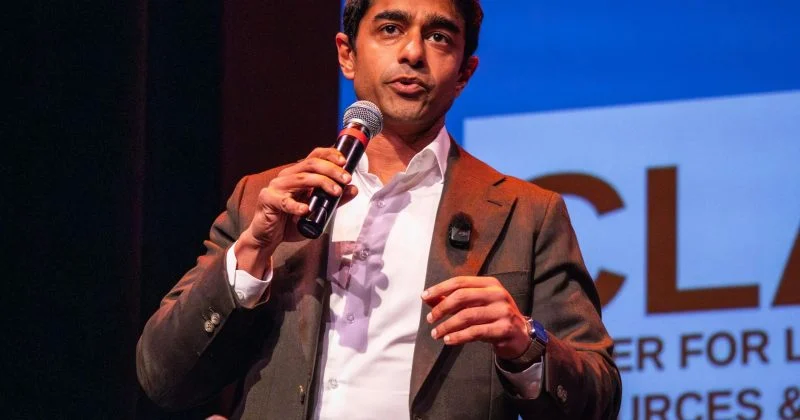
In a surprising turn of events, Saikat Chakrabarti, who previously served as the chief of staff for Rep. Alexandria Ocasio-Cortez and held a position at Stripe, poured between $8.8 million and $10 million of his own funds into his bid for California’s 11th Congressional District. However, despite being the highest-spending candidate, Chakrabarti finished in third place during the Democratic primary held on June 2.
The outcome of the primary saw state Senator Scott Wiener emerge as the victor, securing 41.3% of the votes with a total of 44,521 ballots cast in his favor. Following him was San Francisco Supervisor Connie Chan, who garnered 28.6% with 30,887 votes. Chakrabarti managed to obtain only 14.9%, which amounted to 16,118 votes.
Adding an intriguing layer to the political landscape, Wiener’s successful campaign was bolstered by the Abundant Future super PAC, which received a notable $100,000 contribution from Chris Larsen, co-founder of Ripple. This PAC was instrumental in running targeted attack ads directly aimed at Chakrabarti.
The significance of this congressional primary cannot be understated. The seat, previously held by Nancy Pelosi since 1987, marked the first open race for the district in nearly forty years. Connie Chan’s strong second-place showing played a critical role in a fragmented progressive vote, siphoning potential support away from Chakrabarti.
The implications of this election extend into the world of cryptocurrency and its growing influence in political contests. Larsen’s contribution, while modest in the realm of super PAC funding, proved to be effective in a concentrated race, demonstrating a strong return on investment by needing to sway only a limited number of voters in San Francisco to achieve results.
Furthermore, the political clout of crypto-related funding is beginning to crystallize as seen through the lens of the Fairshake super PAC, the largest of its kind within the crypto industry. This organization has already spent significantly during the 2024 election cycle, with individual contributions from figures like Larsen expanding their reach into the upcoming 2026 races.
As the intersections of finance, technology, and politics become increasingly intertwined, the dynamics of funding and influence in electoral contests are poised to evolve dramatically, potentially reshaping the political landscape in regions like San Francisco.