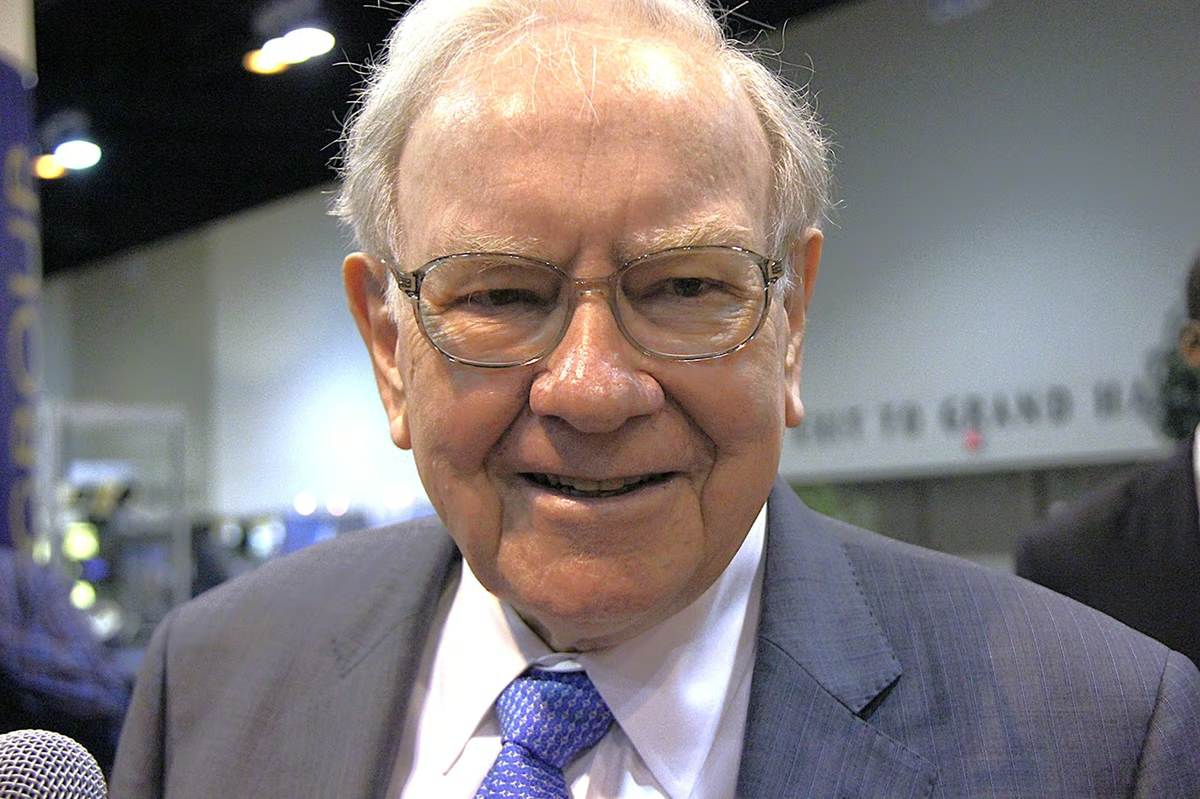
Warren Buffett has stepped down as CEO of Berkshire Hathaway, marking a historic shift for the conglomerate. As Berkshire moves forward under new leadership, the company’s most recent reporting period, reflecting full-year results from 2025, offers an insightful glimpse into Buffett’s investment choices. This period represents the last opportunity to assess the stocks he championed for acquisition or divestment.
While Berkshire’s overall portfolio experienced minor fluctuations, it was notable for some significant sales alongside several key acquisitions. Among these, an energy stock showed a remarkable uptick in its weighting. Previously holding around 122 million shares of this global oil producer, Berkshire augmented its position with an additional 8 million shares last quarter. This brought the company to constitute 7.24% of Berkshire’s entire investment portfolio.
The stock in question is Chevron (CVX), a major player in the energy sector and one of Buffett’s substantial investments to date. Buffett’s history with energy investing includes various oil company stocks, with mixed outcomes. However, his pivot toward Chevron, a staple in Berkshire’s portfolio since 2020, appears particularly strategic.
Chevron has recently achieved record levels of oil and gas production, which enabled the company to return $26 billion to shareholders through dividends and buybacks—an 18% increase year-over-year. Despite these impressive figures, Chevron’s stock grew by only 1.5% in 2025, with a dividend yield of 3.8%. The broader context reveals that low oil prices significantly impacted returns, as both Chevron and its competitor, ExxonMobil, faced diminished revenues despite record production levels. Crude oil prices saw a roughly 20% drop over the year, complicating shareholder returns.
Looking ahead to 2026, Chevron shares have been on the rise, yet they are still below previous highs, largely due to persistent oil prices under $70 per barrel. Notably, in 2022, prices exceeded $100 per barrel, demonstrating the volatility inherent in the energy sector. Chevron’s current estimated break-even production price is around $50 per barrel; profits can greatly increase with a relatively minor uptick in prices—exceeding $90 per barrel could effectively double profit margins per barrel.
Chevron’s business model demonstrates robust fundamentals, yet market conditions beyond the company’s control have overshadowed its efficiencies and production gains. With rising geopolitical tensions potentially influencing oil prices, the outlook for Chevron shares appears promising under favorable conditions. Buffett’s ongoing confidence in Chevron suggests that he and the new leadership at Berkshire Hathaway remain optimistic about the future trajectory of oil prices and the corresponding opportunities for profit growth within the energy sector.