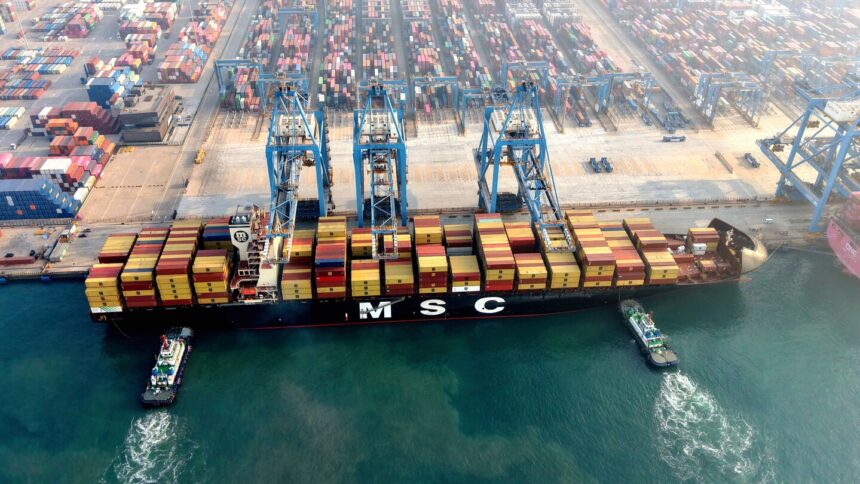
China’s trade landscape showed signs of resilience in November, marking a notable turnaround as exports grew by 5.9% year-on-year, reaching $330.3 billion. This surge came after a surprising contraction of 1.1% in October, exceeding economists’ expectations. However, the exports to the United States continued to struggle, plummeting nearly 29% from the previous year, reflecting an ongoing decline that has persisted for eight consecutive months.
Despite the challenges with U.S. shipments, the overall trade data revealed a stark contrast between exports and imports. China’s trade surplus for the first eleven months of the year climbed above the significant $1 trillion threshold, recording nearly $1.08 trillion, which sets a record for any single calendar year. This figure surpasses the total surplus of $992 billion reported for all of 2024.
While exports to the U.S. have remained lackluster, there has been a marked increase in shipments to various global regions, including Southeast Asia, Latin America, Africa, and the European Union. In November, imports also rose by 1.9%, amounting to over $218.6 billion, which is an improvement over the previous month’s growth rate of 1%. Nevertheless, the ongoing downturn in China’s property sector continues to adversely affect consumer spending and business investment.
The backdrop to these trade dynamics features a recent peace accord between China and the U.S. reached during a meeting in South Korea involving U.S. President Donald Trump and Chinese leader Xi Jinping a month prior. This truce has led to a reduction in U.S. tariffs on Chinese goods and a commitment from China to cease its export controls related to rare earth elements.
Experts suggest that the effects of the initial tariff cuts may not yet have been fully realized in the trade figures, with greater impacts expected in the upcoming months. Despite current contrasts in trade performance, many economists remain cautiously optimistic, believing China is likely to meet its economic growth target of approximately 5% for the year.
At a recent high-level meeting, Chinese leaders emphasized a focus on advanced manufacturing for the next five years. Additionally, an annual economic planning session led by Xi Jinping aimed to outline growth strategies for 2026, reinforcing commitments to “pursuing progress while ensuring stability.”
However, the prospective global trade environment remains uncertain. Analysts like Chi Lo from BNP Paribas Asset Management express concerns that lasting stability may be elusive as U.S.-China relations remain in a stalemate despite the recent truce. Yet, some observers hold a more upbeat outlook, predicting that China will continue to capture a larger share of global exports. Morgan Stanley forecasts that by 2030, China’s global export market share could rise to 16.5%, up from the current level of approximately 15%, driven by strengths in advanced manufacturing and emerging sectors like electric vehicles, robotics, and battery production.