









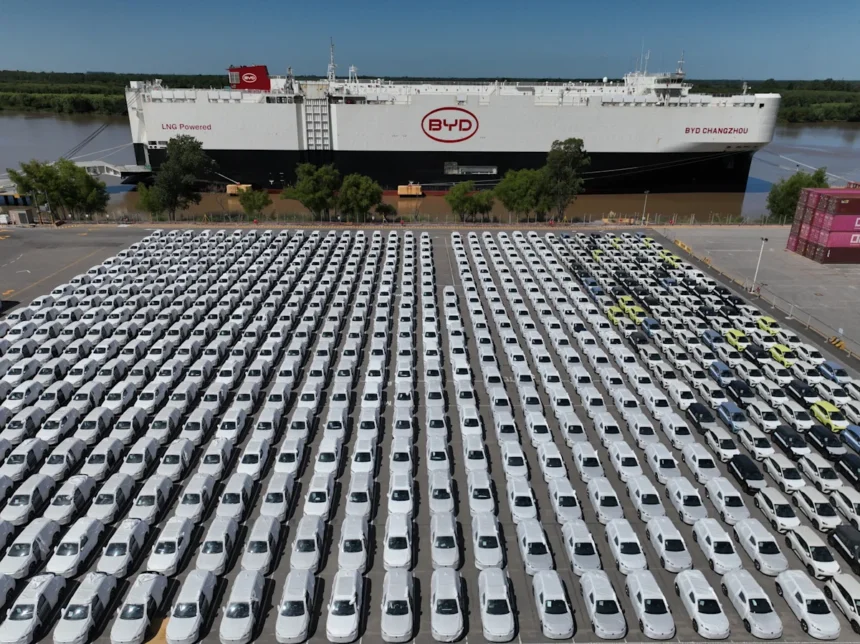
In a significant development for Argentina’s automotive landscape, a cargo vessel from Chinese automaker BYD unloaded over 5,800 electric and hybrid vehicles at a river port in Zárate, marking a historic moment for the nation. This event underscores the rapid acceleration of Chinese exports, which have raised concerns among global competitors, including automakers from the West and Japan.
The arrival of these vehicles is emblematic of a shift in Argentina’s economic policy. Stephen Deng, BYD’s country manager in Argentina, emphasized the company’s commitment to investing in and expanding its dealer network throughout the country. This move challenges decades of protectionist policies espoused by Argentina’s left-wing Peronist governments, which traditionally prioritized local manufacturing through tariffs and restrictions on imports.
The spectacle of duty-free Chinese vehicles arriving at Argentine shores has ignited discussions about the future of the local automotive industry. Claudio Damiano, a transport professor, noted the symbolic significance of this event, reflecting a broader shift in economic strategy under the administration of radical libertarian President Javier Milei. Under Milei, Argentina has embraced a more open trade policy, dismantling many of the restraints that previously limited consumer choice and spurred illicit import activities among those seeking foreign goods.
The latest shipment of Chinese vehicles arrives amid a tumultuous economic landscape. Argentina’s previous protective measures, which included hefty taxes on imports and a weakened currency, severely limited consumer access to international products. However, in stark contrast, Milei has actively slashed trade barriers and worked towards strengthening the local currency, resulting in a record 30% increase in imports last year.
The new regulatory environment allows for 50,000 electric and hybrid vehicles to enter Argentina tariff-free, a change that Chinese automakers are quick to capitalize on. This strategic move follows the arrival of the initial BYD shipment, which traveled from Singapore in 23 days, setting a precedent for future imports.
The impact of these policies extends beyond just the automotive sector. Argentina’s history under Peronism has shaped its trade dynamics, fostering a closed economy wary of foreign competition. Yet with the shift towards a more market-oriented approach, the presence of Chinese vehicles presents challenges for established local manufacturers and raises questions about future market dynamics.
Milei’s administration has garnered attention not only for fostering trade but also for its ideological alignment with international figures such as former U.S. President Donald Trump. Both leaders advocate for deregulation and express skepticism towards multilateral institutions. In a notable contrast, while Trump has focused on asserting American dominance in global affairs, Milei is seeking to reinvigorate Argentina’s economy through open trade.
The surge in Chinese imports has been substantial, rising over 57% last year. This influx is not limited to automobiles; Chinese investments have increased significantly in Argentina’s energy and mining sectors as well. Economists suggest that without the barriers previously imposed on imports, Chinese brands like BYD are well-positioned to dominate the market, especially with government quotas favoring low-cost electric vehicles.
Despite some apprehension from local manufacturers regarding competition and infrastructure readiness, experts point out that Argentina still has significant gaps in its electric vehicle industry. Challenges like an aging power grid and a lack of service centers for maintenance of imported vehicles remain pressing concerns that could complicate the landscape as consumer demand for electric vehicles grows.
While the long-term impacts of this transition remain to be seen, the arrival of Chinese electric vehicles marks a pivotal moment in Argentina’s approach to trade and industry, potentially reshaping consumer habits and the automotive industry for years to come.