Utah-based drink chain Swig introduced the concept of “dirty soda” in 2010, a unique drink that combines soda with flavored syrups, cream, and other ingredients. Fast forward fifteen years, and this trend has significantly influenced the beverage industry, breathing new life into what has been a struggling category. As it stands, nearly every area, from grocery stores to fast-food chains, has adopted variations of dirty soda, thanks in part to social media platforms like TikTok and exposure from reality TV shows such as “The Secret Lives of Mormon Wives.”
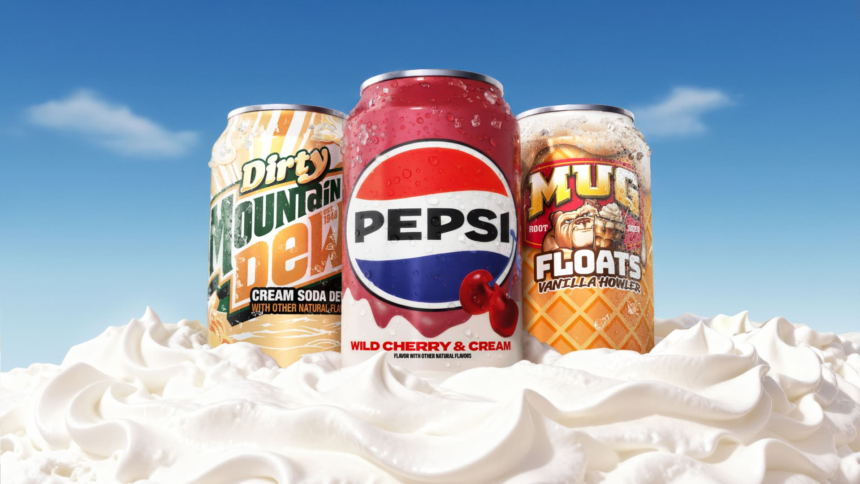
PepsiCo is gearing up to showcase its take on dirty soda at the upcoming National Association of Convenience Stores trade show in Chicago, introducing two new ready-to-drink variants: Dirty Dew and Mug Floats Vanilla Howler. This comes hot on the heels of their earlier release of the Pepsi Wild Cherry & Cream flavor. Mark Kirkham, Chief Marketing Officer at Pepsi Beverages North America, highlighted that dirty soda offers consumers a fresh perspective on soda consumption, likening it to the nostalgic charm of root beer floats.
The trend has not only caught the interest of beverage manufacturers but has also influenced the restaurant industry. A recent report indicates that 2.7% of U.S. eateries now serve carbonated soft drinks blended with cream or milk, a notable increase from just 1.5% a decade ago. TGI Fridays recently introduced a limited-time dirty soda item, which can even be spiked with alcohol, while McDonald’s is experimenting with flavored sodas, such as the “Sprite Lunar Splash,” at over 500 locations.
Swig itself has expanded impressively, boasting over 140 locations across 16 states and a same-store sales increase of 8.2% this year. The company is backed by the Larry H. Miller Company, which acquired a majority stake in 2022. Swig’s CEO, Alex Dunn, expressed pride in the company’s role in reshaping the soda category, suggesting they are doing for soda what Starbucks accomplished with coffee.
Rival chains including Sodalicious, Fiiz, and Cool Sips have also emerged, capitalizing on the dirty soda craze. Even traditional coffee shops, such as Dutch Bros., have integrated dirty soda options into their menus. Dunn remarked on the validation of the dirty soda category, suggesting that the interest from industry giants like McDonald’s and Taco Bell underscores its broad consumer appeal.
For restaurants, incorporating dirty soda into their offerings is straightforward, utilizing existing soda machines and possibly adding a simple ingredient like cream. This contrasts sharply with the more complex process of creating customizable coffee drinks, which can often hinder operations at coffee shops.
The accessibility and lower caffeine levels of dirty sodas make them appealing alternatives for consumers, especially younger demographics. With vibrant colors and fun flavors, these drinks are particularly attractive to younger individuals, many of whom were introduced to the trend through social media.
As Americans have gradually shifted away from traditional soda consumption over the past two decades—experiencing a peak in 2004 at 15.3 billion gallons and decreasing to 11.87 billion gallons by 2024—the recent resurgence in dirty soda is seen as a pivotal moment. It has begun to reinvigorate carbonated beverage sales, with projections suggesting a slight uptick in consumption in the upcoming years.
The popularity of dirty soda is also witnessing a generational shift. Younger consumers, characterized by their willingness to try new beverages, are increasingly captivated by this trend. With nearly 75% of Generation Z exploring new drink options monthly, the dirty soda phenomenon has expanded its reach.
Beverage companies note that dirty soda serves as a valuable “recruitment tool,” introducing new customers to their primary brands while enhancing overall industry dynamics. This trend provides beverage makers with a fresh canvas for creativity, leading to innovative offerings like the Dr Pepper Creamy Coconut, which has achieved significant retail sales success. Pepsi’s Kirkham anticipates that the rise of dirty soda will inspire even more playful and customizable consumer experiences moving forward.