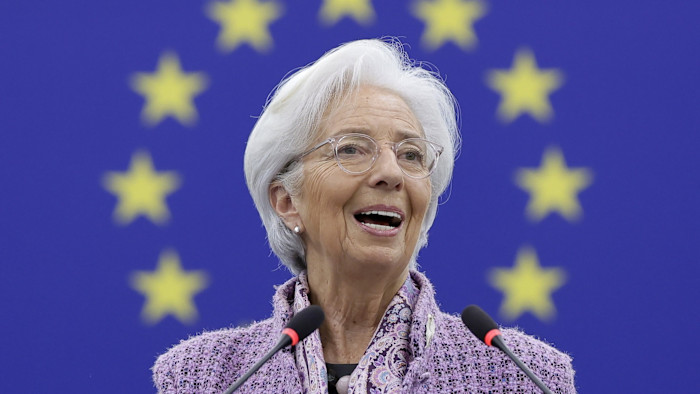
Christine Lagarde, the current president of the European Central Bank (ECB), is anticipated to exit her role before the completion of her eight-year term, which officially runs until October 2027. Sources familiar with her thinking indicate that she wishes to depart prior to the French presidential elections scheduled for April 2027. This timely exit would allow outgoing French President Emmanuel Macron and German Chancellor Friedrich Merz the opportunity to appoint a new leader for the ECB, one of the EU’s most pivotal institutions.
Despite these insights, the ECB has publicly stated that Lagarde remains “totally focused on her mission” and has not made any definite decisions regarding the end of her term.
In light of her potential departure, speculation is already brewing about who could succeed her. European economists recently polled by the Financial Times identified Spain’s former central bank governor, Pablo Hernández de Cos, and his Dutch counterpart, Klaas Knot, as leading candidates. ECB executive board member Isabel Schnabel has also expressed interest in the position, and discussions surrounding Bundesbank president Joachim Nagel suggest he too is eager to take on the role.
As the political landscape evolves, Macron is reportedly keen to influence Lagarde’s successor, particularly with his inability to run for a third presidential term. This interest in succession follows the announcement by French central bank governor François Villeroy de Galhau, who recently declared his intention to resign in June, 18 months ahead of his term’s completion. Although Villeroy de Galhau has claimed his departure is for charitable pursuits, critics suggest that Macron’s influence has played a role in this decision to clear the way for a new appointment.
The upcoming presidential election is crucial for France, particularly amid the rise of far-right candidate Marine Le Pen, who consistently polls ahead of rivals. While Le Pen faces potential disqualification from her candidacy due to a previous conviction for embezzlement related to European parliamentary funds, she has indicated that her protégé, Jordan Bardella, could take her place. This shift could pose challenges for the ECB and other European institutions, as both Le Pen and Bardella are known for their Eurosceptic views.
Amid these political maneuvers, Macron has also been fortifying key governmental positions in anticipation of the 2027 elections, including appointing a close ally to lead the national auditor’s office.
Lagarde’s leadership of the ECB has been marked by a series of significant crises, including the COVID-19 pandemic, Russia’s invasion of Ukraine, and ongoing trade tensions with the United States. Under her watch, inflation in the Eurozone reached nearly 11% in late 2022, largely driven by skyrocketing energy prices and supply chain disruptions related to the pandemic. In response, the ECB raised interest rates from negative territory to 4% in just over a year before ultimately reducing them back to 2% by mid-2024 as inflation levels fell.
Lagarde took on her responsibilities at the ECB following a unique political agreement in 2019 between Macron and then-German Chancellor Angela Merkel, which also saw Ursula von der Leyen assume the presidency of the European Commission. She previously expressed that she had agreed to the role with the understanding of a five-year commitment, although Macron had indicated an expectation of an eight-year term during their discussions.
In June of last year, an ECB spokesperson emphasized Lagarde’s determination to fulfill her complete term, even as speculations of an early exit surfaced. In a statement that reinforced her commitment, Lagarde humorously noted to reporters, “I regret to tell you that you’re not about to see the back of me,” suggesting her focus remains on navigating the challenges of her current role.