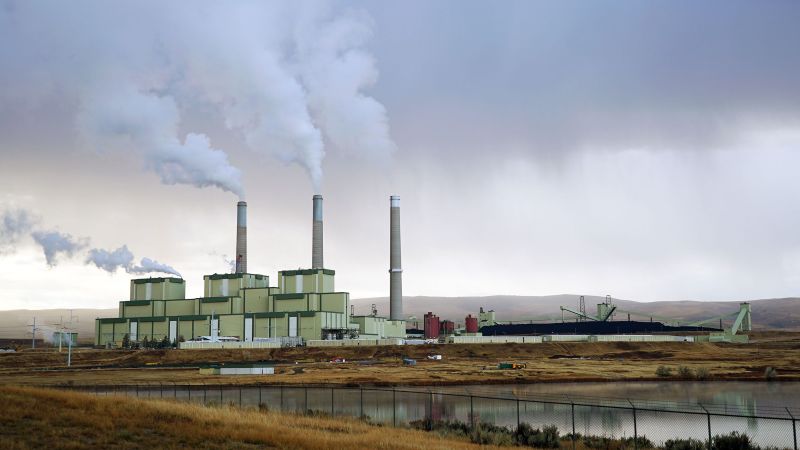
The Trump administration has announced an order to keep the Craig Generating Station Unit 1, an aging coal-fired power plant in northwest Colorado, operational until the end of March. This decision comes just a day before the plant was scheduled for retirement. Energy Secretary Chris Wright has indicated that this extension is crucial to maintaining an affordable, reliable, and secure supply of electricity for Americans.
This move marks the sixth instance this year in which the Department of Energy has intervened to extend the operational life of coal plants. Wright has similarly ordered plants in Indiana, Michigan, and Washington state to continue operating beyond their planned retirement dates, as well as a Pennsylvania plant that utilizes oil.
However, the order has drawn significant criticism from Colorado’s state officials. Governor Jared Polis has publicly contested Wright’s assertion that keeping the Craig plant open would reduce electricity costs, arguing instead that it would impose substantial economic burdens on Colorado ratepayers. Polis stated that the costs associated with keeping the plant operational would amount to “tens of millions” of dollars, contradicting the notion that it provides a cost-effective energy solution.
Furthermore, Governor Polis highlighted that Craig 1 is currently non-operational due to a critical component failure that occurred in December 2022, requiring costly repairs before it could even generate electricity. The Tri-State Generation and Transmission Association, which owns Craig 1, confirmed that the unit has been offline for months and warned that compliance with Wright’s order could lead to significant financial consequences for its members.
Estimates from power sector consulting firm Grid Strategies indicate that maintaining Craig 1 for an additional 90 days could cost at least $20 million, while keeping it operational for a year might require around $85 million. If the Department of Energy mandates extensive operation, the total expenses could rise to $150 million annually. Most of these costs are attributed to coal procurement, which raises additional concerns since the mine located near the plant has already been exhausted, necessitating the sourcing of coal from farther locations at potentially higher costs.
Will Toor, executive director of the Colorado Energy Office, emphasized that the energy landscape has already evolved, with new gas and renewable projects replacing the output previously generated by Craig 1. He asserted that forecasts from the North American Electric Reliability Corporation do not indicate any reliability risks for the state’s grid, arguing that maintaining the coal plant is unwarranted.
Toor criticized Wright’s order as an attempt to support coal for ideological reasons, stating that it contradicts the trend toward cleaner, more sustainable energy sources like wind and solar. He argued that delaying the transition to renewable energy not only raises costs for consumers but could also undermine grid reliability by hampering the development of quicker-to-install resources.
Previous extensions of coal plants under Wright’s directive have also incurred significant costs for ratepayers, as seen in Michigan, where keeping a retiring coal plant operational from late May to late September led to an $80 million cost, ultimately impacting electricity bills for consumers across several states served by the utility.
Notably, environmental groups are currently mounting legal challenges against Wright’s interventions regarding other coal plants, seeking to contest the broader implications of these decisions on energy policy and environmental standards.