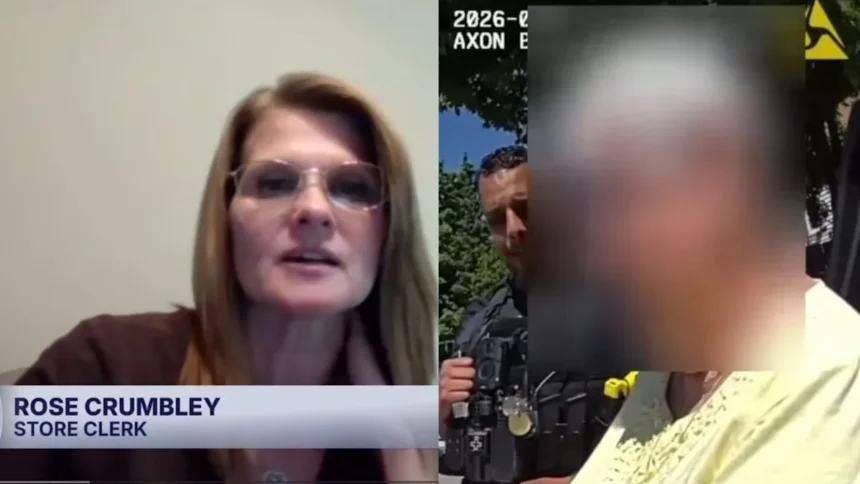
An employee at a Westlake, Ohio store played a crucial role in preventing what could have been a devastating financial scam targeted at an elderly woman. While stocking shelves, Rose Crumbley noticed an 85-year-old woman at a Bitcoin machine with a staggering $18,000 in cash. The woman was on the phone, convinced she was resolving issues related to her Apple account based on a text message she had received suggesting there were unauthorized charges.
Recognizing the potential for a scam, Crumbley intervened just before the woman could complete the transaction. She called 911, informing the police that a woman was at the store attempting to be scammed. Her quick thinking ensured that the police arrived in time to halt the potentially fraudulent transaction, allowing the woman to retain her cash and preventing the scammers from making off with it.
Crumbley recounted that when she confronted the woman, she explained the risks involved, warning her, “Once the cash goes into that machine, you’re not going to get it back.” Despite the woman’s insistence that she was dealing with her bank, Crumbley persisted, urging her to reconsider.
When police arrived, the elderly woman detailed her interactions with the scammers, who had misled her into believing that they were assisting her in handling the fake charges. They had instructed her to withdraw a large sum of money and warned her not to disclose anything to others, claiming that doing so would jeopardize their investigation.
Westlake police Capt. Jerry Vogel emphasized that scammers often prepare their victims with misleading information to avoid suspicion when engaging with bank employees, store staff, or law enforcement. Crumbley expressed a personal connection to the situation, revealing that a family member had been scammed previously. She insisted on the importance of community members watching out for one another, particularly the elderly.
Cryptocurrency ATMs, such as the Bitcoin machine at the store, have become increasingly associated with scams. The Federal Trade Commission (FTC) has highlighted how scammers leverage these machines, typically convincing victims that using them is a means to safeguard their money or resolve nonexistent issues. Ericka Dilworth, vice president of operations at the Cleveland Better Business Bureau, advised potential victims to verify any suspicious messages by contacting their bank directly or consulting trusted family members, rather than following the instructions provided in scam texts.
In instances where individuals receive unsolicited messages regarding account charges, Dilworth advises against calling the number provided and instead recommends using official channels. The incident in Westlake serves as a potent reminder of the vigilance required to protect those most vulnerable to such scams.