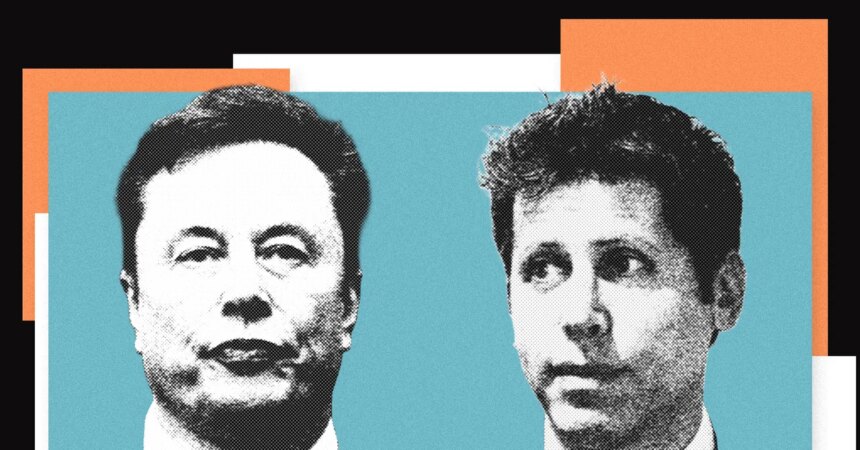
Attorneys provided closing arguments in the high-stakes trial between Elon Musk and Sam Altman on Thursday, striving to convince the judge and jury of their clients’ intentions regarding the nonprofit mission that underpinned the establishment of OpenAI. The court is now poised to deliver a verdict as early as next week, marking the culmination of a decade-long conflict between two of the technology sector’s most powerful figures. However, amid the intricacies of this legal battle, many stakeholders seem to be left at a loss.
The real victims emerging from these proceedings appear to be the employees, policymakers, and members of the public who have supported OpenAI due to its proclaimed commitment to a nonprofit research agenda. Expert opinions indicate that the overarching priority for Musk and Altman has shifted towards constructing a leading AI entity, often at the expense of the original nonprofit ethos.
“It’s hard to see how the public interest is being protected by either of these parties, and that is really what is ultimately at stake in a case about a nonprofit,” remarked Jill Horwitz, a law professor specializing in nonprofits and innovation. Her observations underscore a challenging reality: regardless of the trial’s outcome, the public’s trust and interest in OpenAI may remain compromised.
OpenAI’s mission emphasizes the importance of ensuring that artificial general intelligence (AGI) serves humanity; however, the case has largely marginalized the relevant public. The organization has spent years actively competing with industry giants, such as Google, in the quest to achieve AGI, with both Musk and Altman fiercely contesting who will exert ultimate control over OpenAI.
Former OpenAI researcher Daniel Kokotajlo, who expressed concerns about the company’s safety practices, characterized the situation as a competitive race. “Musk and Altman are basically locked in a race to be the first to build superintelligence, and they both rightly fear what the other will do if they win. The rest of us should fear them both,” he stated. His comments reflect a growing anxiety among some stakeholders regarding the implications of such a powerful AI being wielded by either of these individuals.
During the trial, OpenAI’s nonprofit arm was frequently treated as just another corporate entity. The defense argued that granting the nonprofit a staggering $200 billion stake in the for-profit segment of OpenAI is evidence of the organization fulfilling its mission. However, public advocacy groups counter that financial backing alone does not equate to genuine adherence to the nonprofit’s foundational goals.
Nathan Calvin, VP of state affairs for the AI safety nonprofit Encode, weighed in, emphasizing that while the resources at the OpenAI foundation’s disposal for philanthropic efforts are commendable, the governance of the nonprofit plays a critical role. “The mission of the nonprofit is not that of a typical foundation; it is specifically to ensure that AGI benefits all of humanity,” he said, reinforcing the notion that financial resources should not overshadow this overarching objective.
Historical insights shed light on the beginnings of OpenAI, revealing that Musk and Altman initially shared a vision for the organization: to emerge as a nonprofit entity competing with Google DeepMind in the race for AGI. However, the journey toward achieving that vision involved complexities that have culminated in significant discord. Musk has accused Altman, OpenAI’s CEO, along with cofounder Greg Brockman, of deviating from their founding mission, alleging that the initial investment of $38 million has morphed into a colossal enterprise valued at $850 billion, creating numerous billionaires in the process.
As the verdict approaches, it remains to be seen how the court will navigate the intricate relationship between philanthropy, control, and the original vision that intended to ensure technological advancements would benefit humanity as a whole.