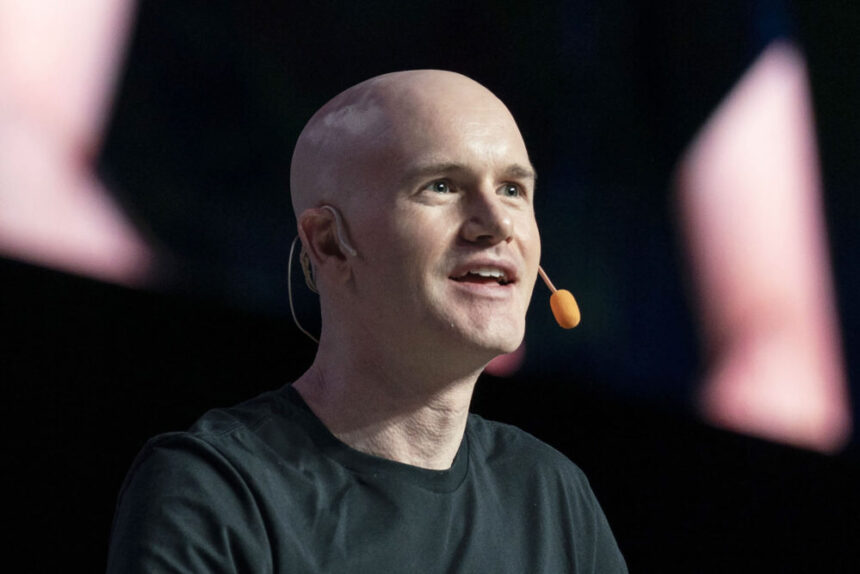
Coinbase’s Chief Executive, Brian Armstrong, has indicated that the company is poised for further acquisitions following its substantial $2.9 billion deal to acquire Deribit, one of the largest crypto derivatives exchanges worldwide. This strategic move illustrates Coinbase’s intention to leverage its robust balance sheet to drive accelerated growth and enhance its market position.
In a recent interview with Bloomberg Television, Armstrong affirmed that Coinbase is “always looking” for merger and acquisition opportunities, while maintaining a selective approach. He underscored the company’s financial strength as a publicly traded entity, which provides it with liquidity for potential deals.
The Deribit acquisition, announced in May 2025 and finalized in August 2025, consisted of $700 million in cash alongside approximately 11 million shares of Coinbase Class A common stock. This deal positioned Coinbase prominently in the global crypto options market, where Deribit had long served as a leading platform for Bitcoin and Ether options trading. Coinbase documented impressive trading volumes for Deribit, reporting July 2025 figures exceeding $185 billion and around $60 billion in open interest prior to the deal’s completion.
Expanding into derivatives signifies a crucial shift for Coinbase, which is striving to transform itself into an all-encompassing digital asset exchange that offers a wide array of services beyond traditional spot trading. With the incorporation of Deribit, the company now has access to a more extensive global derivatives platform that includes spot trading, futures, and options under one unified structure.
Armstrong’s statements suggest that the firm views acquisitions as integral to its strategic agenda, rather than a mere reaction to market changes. This acquisition strategy positions Coinbase favorably against competing offshore exchanges, which have historically dominated the global derivatives market. Derivatives, particularly options trading, hold substantial importance for institutional investors, market makers, and professional traders, who require hedging and exposure strategies.
The merger landscape following 2024 points to a more aggressive trend, driven by stronger asset prices, improved regulatory perspectives, and increased institutional involvement in the crypto market. Major firms are now more inclined to acquire key infrastructure and capabilities, rather than developing everything in-house. Coinbase’s public status affords it a unique funding advantage, allowing for significant acquisitions that could potentially avoid full reliance on cash, albeit with the risks of shareholder dilution and exposure to stock market volatility.
However, the complexities of integrating Deribit’s operations pose challenges, especially given the heightened regulatory scrutiny in derivatives markets compared to spot trading. Coinbase will have to navigate the regulatory intricacies inherent in U.S. and international markets, ensuring compliance amid these complexities.
Armstrong has also hinted at a continued focus on international acquisitions that can expedite product innovation and bolster growth. This could lead Coinbase toward further opportunities in derivatives, payments, custody, and other vital areas, where strategic acquisitions could yield faster growth than organic development.
As Coinbase expands its footprint through acquisitions, it will inevitably attract greater regulatory scrutiny surrounding market concentration, customer protections, and cross-border compliance. The effectiveness of Coinbase’s integration of new platforms while maintaining compliance will be crucial in determining whether its growth strategy enhances or complicates its long-term market position.
For investors, Armstrong’s comments suggest that Coinbase is gearing up for a period of intensified consolidation within the digital asset space. The successful integration of Deribit has established Coinbase as a dominant player in the derivatives market, and subsequent acquisitions could redefine its trajectory as a comprehensive global crypto financial platform or maintain its status as a primarily U.S.-centric exchange in a rapidly evolving market.