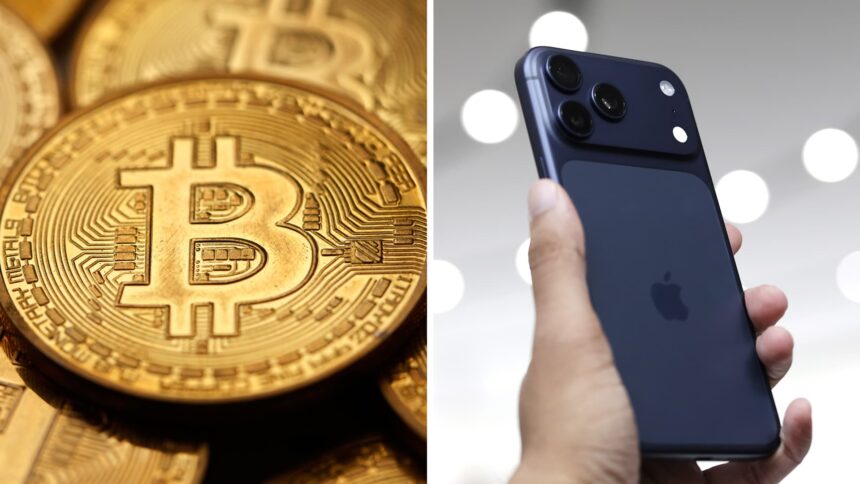
In recent comments, CoinDesk’s president of indices and data, David LaValle, shared insights on the current state of bitcoin and its future prospects amidst a turbulent market. Speaking on CNBC’s “ETF Edge,” LaValle urged investors to remain optimistic about the cryptocurrency, likening its potential to that of disruptive technologies like smartphones.
Reflecting on his personal experiences with technology, LaValle noted that he didn’t dismiss the utility of a smartphone just because it couldn’t hail a taxi at his doorstep. Instead, he embraced the convenience it offered, highlighting a parallel to how investors should view bitcoin during its current downturn. Bitcoin has lost nearly 2% over the past holiday week and has plummeted nearly 50% from its all-time high of $126,279 recorded on October 6, 2025.
Despite these challenges, including a recent drop to the $63,000 range after briefly surpassing $65,000, LaValle believes that the current climate, often referred to as a “crypto winter,” will not dissuade interest from both institutional and retail investors. He emphasized that rather than questioning the future of digital assets, the focus has shifted to when investors see the right time to re-enter the market.
Todd Rosenbluth, head of research at TMX VettaFi, echoed LaValle’s sentiments by pointing out a positive trend among bitcoin ETF investors. He observed that many have maintained their positions despite ongoing market volatility, signifying a degree of resilience and optimism within the investor community. The iShares Bitcoin Trust ETF (IBIT) recently experienced net outflows, yet investors continued to buy into the fund even during bitcoin’s price decline, indicating a steadfast belief in the asset’s long-term potential.
Rosenbluth referenced a survey conducted in early May, which revealed that a considerable number of financial advisors’ clients are still monitoring the cryptocurrency space. Approximately half of the advisors surveyed reported that their clients were on the sidelines, with only 22% actively investing in digital assets. He noted that while a pullback can create new opportunities for some, it may deter others who prefer avoiding high volatility.
The impact of these market losses has also been felt among major bitcoin ETFs like the iShares Bitcoin Trust ETF and Grayscale Bitcoin Trust ETF (GBTC), both of which have experienced a nearly 40% decrease over the past year. Despite this turbulence, LaValle and Rosenbluth remain hopeful about the evolving demand for bitcoin and other digital assets, suggesting that this period of re-evaluation could pave the way for future growth in the sector.