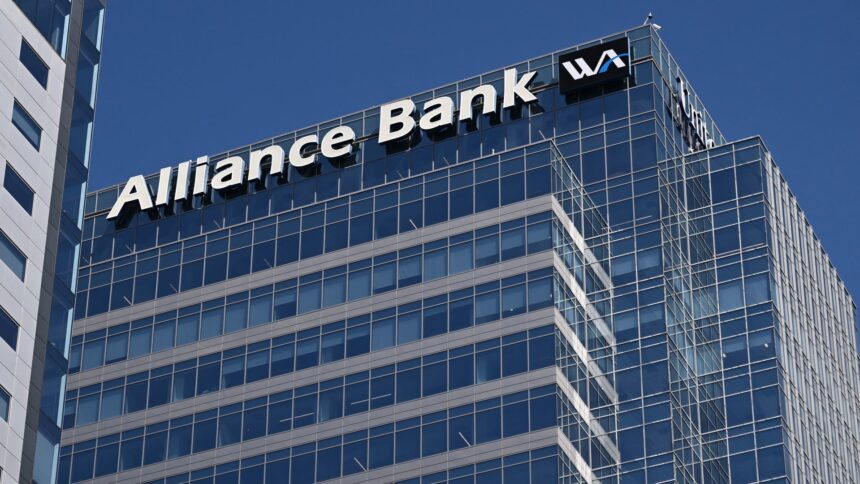
Signage for Western Alliance Bank is prominently displayed at the company’s headquarters in downtown Phoenix, Arizona, highlighting a troubling trend affecting the banking industry. A growing number of borrowers with previously solid credit ratings are now struggling to meet their loan obligations, raising alarms about the overall economic health. This concern is magnified by the recent bankruptcies of First Brands, an auto parts manufacturer, and the car dealership Tricolor Holdings. Both companies filed for bankruptcy in September, exposing major banks such as Jefferies, UBS, and JPMorgan to significant financial risks.
The ramifications of these bankruptcies have sparked inquiries about how the downfall of a relatively obscure auto parts supplier could ripple through the global banking and fund management sectors. Reports indicate that potentially billions of dollars might be tied up in the fallout. CNBC’s Hugh Leask noted the growing apprehension surrounding the connections between these defaults and the broader financial landscape.
The situation escalated when two U.S. regional banks expressed concerns about their loans, hinting that these may not be isolated incidents. JPMorgan CEO Jamie Dimon’s warning during a recent earnings call resonates: “When you see one cockroach, there are probably more.” This analogy underscores the potential for more defaults lurking beneath the surface, reminiscent of the subprime mortgage crisis that precipitated the 2008 global financial crisis. That crisis resulted in widespread layoffs and economic downturns, stemming from individuals’ inability to fulfill their mortgage obligations.
Meanwhile, the unsettling news surrounding bad bank loans has created ripples on Wall Street. CNBC’s Jim Cramer suggested that the troubling developments could prompt the Federal Reserve to consider lowering interest rates—an action many investors have been eagerly anticipating. “Today got real ugly, but at least we finally have something that can make the Federal Reserve itchy to cut interest rates sooner rather than later: bank loans gone bad,” he observed. Cramer emphasized that credit losses serve as a clear indicator of an economy that may be deteriorating, thereby motivating the Fed to take action.
As concerns mount over the implications of these financial struggles, analysts and investors remain vigilant, contemplating the potential domino effect on the broader economy.