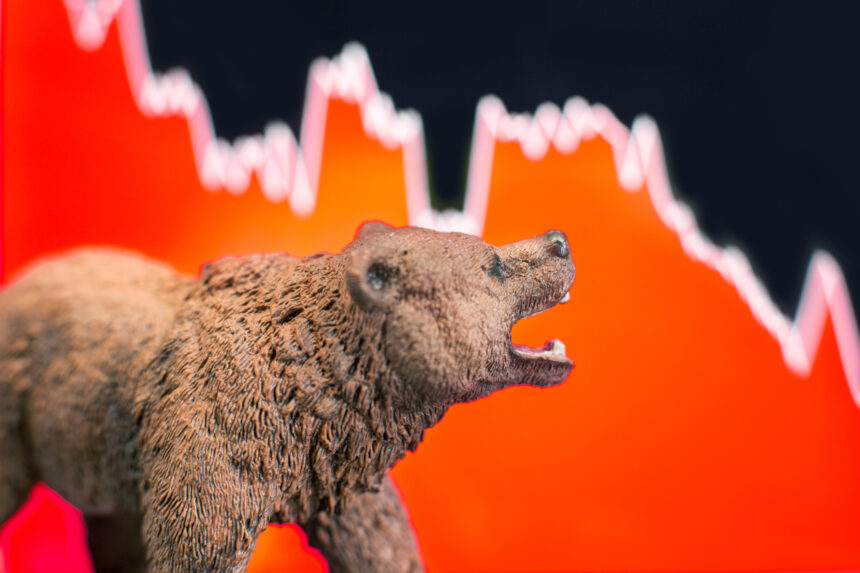
Economic conditions in the U.S. have raised red flags for the stock market, as recent data reveals a tumultuous landscape. While the S&P 500 companies have reported third-quarter earnings that surpass Wall Street expectations—showing a double-digit increase for four consecutive quarters—the stock market reacted unfavorably in early November. The S&P 500 experienced a setback of 1.6%, while the technology-heavy Nasdaq Composite plunged by 3%, marking its worst weekly performance since significant tariff announcements in April.
Investor anxiety has intensified due to a prolonged government shutdown that reached record lengths, coupled with a labor market showing signs of distress. October saw layoffs hit a 22-year high, and hiring slowed notably over the summer, prompting concern among market participants about the overall economic outlook.
In tandem with these concerns, consumer sentiment has been on a downward trajectory, hitting a preliminary index reading of 50.3 in November, which ranks as the second-lowest since the University of Michigan began its surveys nearly 50 years ago. The sentiment index has now fallen for four consecutive months, raising alarms over consumer confidence. It’s noteworthy that this figure might see revision later in the month, as it did in October, where an initial reading of 55 was adjusted downward to 53.1.
Inflation expectations among consumers have also worsened, with predictions for the next 12 months increasing to 4.7%, slightly above the previous month and significantly higher than the five-year average of 4.1%. This aligns with a trend observed in earnings calls, where 42% of S&P 500 companies reported inflation as a growing concern, a rise from previous quarters.
Compounding these issues is the alarming valuation of the stock market. In late October, the S&P 500’s forward price-to-earnings (PE) ratio hit 23.1, a level that has been reached only once in the past quarter-century. The index previously exceeded this threshold in September 2020, a time characterized by heightened investor confidence due to government stimulus efforts. However, that confidence led to inflated valuations, ultimately resulting in substantial market corrections as inflation and interest rate hikes took their toll.
Historically, the stock market has shown a capacity for drawdowns in situations where elevated forward PE ratios exist, suggesting a potential decline in values may be imminent, even if immediate returns appear positive. With consumer spending constituting approximately two-thirds of the gross domestic product (GDP), any protracted issues with inflation and the labor market could keep consumer sentiment low, threatening overall economic stability.
As investors navigate this uncertain terrain, the impending challenges in the labor market and inflation may suggest a need for vigilance and preparedness for potential market downturns, despite some optimistic earnings reports from major companies. The outlook remains precarious, and while investors may hope for a rebound, they must also brace for the possibility of more challenging times ahead.