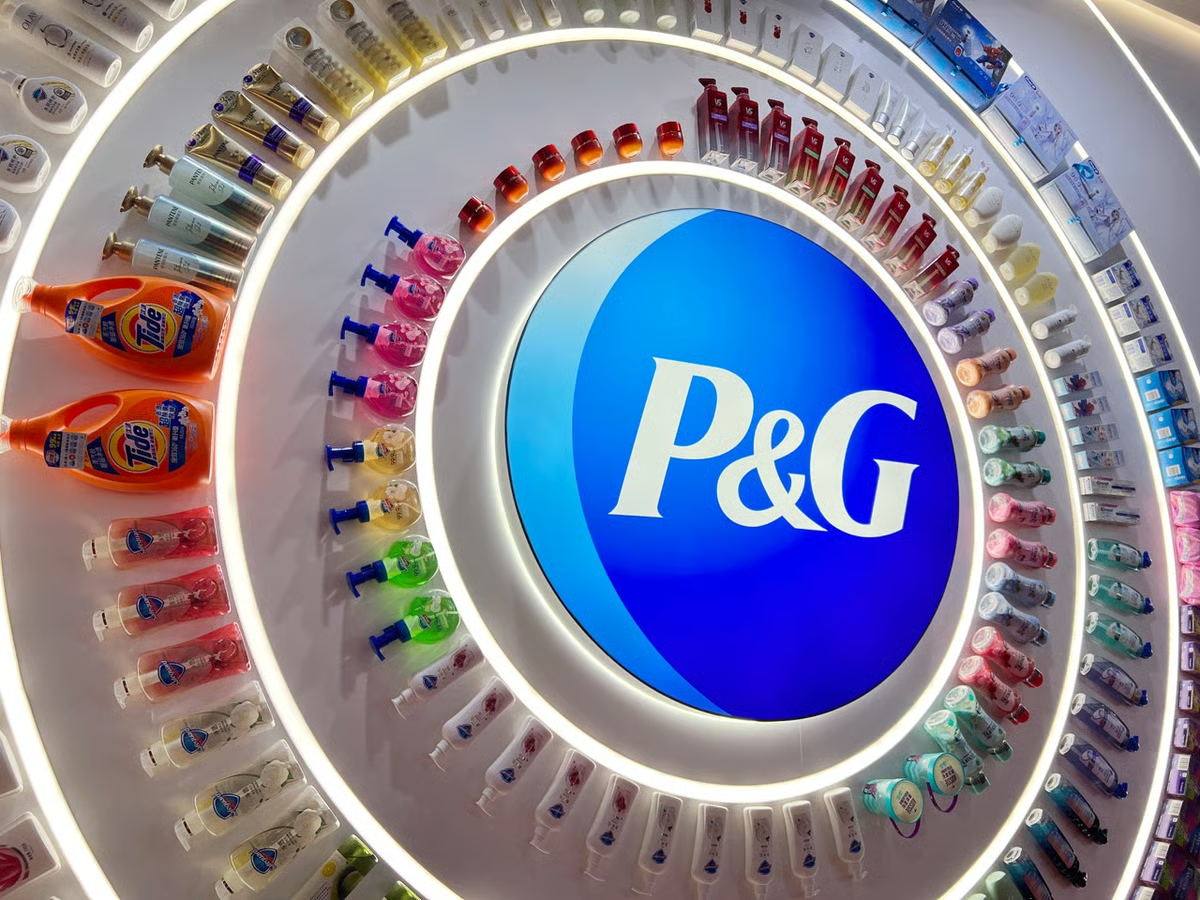
Consumer staples stocks have recently fallen out of favor among investors, presenting a significant buying opportunity for value-focused individuals. Despite the broader S&P 500 experiencing remarkable returns, with a notable 78.3% gain from early 2023 to the end of 2025, the consumer staples sector barely managed to grow, registering a mere 5% increase over the same period.
This divergence has attracted the attention of contrarian investors and those prioritizing capital preservation and passive income. Beaten-down consumer staples companies, particularly high-yield Dividend Kings—entities that have consistently raised their dividends for at least 50 years—are now increasingly appealing. Procter & Gamble and Kimberly-Clark stand out as key investment choices for those looking to secure dependable income streams in 2026.
Procter & Gamble, the largest player in the household and personal products sector, faced a challenging 2025, with stock value plummeting by 14.5%, bringing it close to a three-year low. Although the company has seen a slight recovery this year, its second-quarter earnings report and full-year guidance fail to inspire confidence among shareholders. The company’s sales volume declined by 1%, while organic sales growth remained stagnant. Additionally, restructuring efforts contributed to a 5% drop in diluted net earnings per share (EPS), leading to a downgrade in EPS growth projections for fiscal 2026.
During an earnings call, Procter & Gamble acknowledged a troubling trend of over-reliance on price increases to drive earnings growth amidst weak demand, an issue highlighted by analysts early in 2023. The company’s new CEO Shailesh Jejurikar has indicated a shift in strategy, focusing on improving the value proposition rather than further price hikes, a transition that will require time to manifest in volume growth. However, Procter & Gamble boasts robust operating margins that could cushion potential decreases, making it a formidable player.
Despite recent challenges, Procter & Gamble’s dividend remains one of the most impressive in the nation, boasting a yield of 2.9% and a commendable track record of increasing payouts for 69 consecutive years. Moreover, its ability to generate substantial free cash flow places it in a favorable position among value investors.
On the other hand, Kimberly-Clark reported disappointing performance with a modest 3.2% growth in adjusted EPS and a flat adjusted operating profit in the same period. Looking ahead, forecasts indicate only slight improvements, with expectations of 2% organic sales growth and flat adjusted EPS for 2026. Despite these uninspiring results, analysts believe there may be potential for long-term value investors to explore Kimberly-Clark shares, particularly in light of its imminent acquisition of Kenvue.
This strategic move aims to create a more diversified entity by merging Kimberly-Clark’s strengths in essential household goods with Kenvue’s robust consumer health brands. The anticipated benefits from this merger include the potential for combined earnings to surpass those of the two companies operating independently. Kimberly-Clark also expects to realize approximately $2.1 billion in annual cost synergies within three years of the acquisition’s completion.
The company currently yields a healthy dividend of 5%, having increased its payout for the 54th consecutive year. Its stock price is hovering around its lowest level in over a decade, and while growth has slowed considerably, it continues to generate significant free cash flow, further enhancing its appeal as a value investment opportunity.
In summary, Procter & Gamble and Kimberly-Clark exemplify two beaten-down Dividend Kings to consider for investment in 2026. Procter & Gamble offers a higher quality portfolio and less volatility, while Kimberly-Clark presents a cheaper entry point with potentially higher rewards as it navigates its turnaround strategy. Investors may opt for either stock or choose to create a balanced investment through a 50/50 split, which would result in a reasonable average yield of 4%.