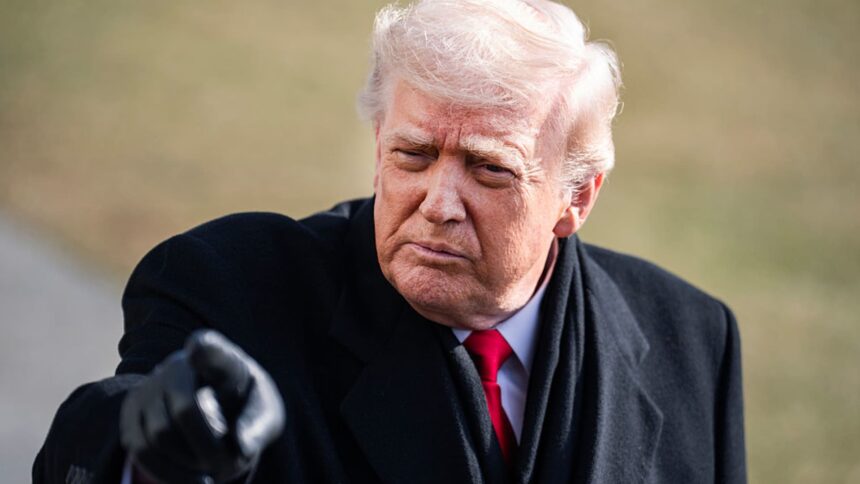
In a recent segment of “Mad Money,” CNBC’s Jim Cramer offered insights into the considerable influence of President Donald Trump on the stock market, emphasizing that the effects vary significantly among different companies. Cramer highlighted the dual nature of the government’s role, suggesting it can be both beneficial and detrimental to businesses.
During the discussion, Cramer focused on the stark downturn experienced by major health insurers. Leading the charge downward, shares of UnitedHealth and Humana saw declines exceeding 20%, while CVS Health, which owns Aetna, dropped 14%. This sharp decline came in response to the Trump administration’s proposal for a nearly unchanged reimbursement rate for Medicare Advantage plans in 2027, which stands in stark contrast to Wall Street’s anticipated increases of 4% to 6%. Cramer expressed surprise at this development, noting that both major political parties had historically approved price increases for these plans, implying a significant shift in the policy landscape.
In contrast to the challenges faced by health insurers, Cramer pointed to two companies that have thrived under Trump’s policies. He praised General Motors for demonstrating the advantages of the administration’s relaxed environmental regulations. The automaker was able to sell more gas-powered vehicles without the need to acquire electric vehicle credits, resulting in quarterly earnings that exceeded expectations and an impressive 8.75% rise in its stock price on that day. Cramer lauded CEO Mary Barra, stating she should celebrate the company’s performance and predicting even greater successes ahead as the business environment continues to favor them.
Additionally, Cramer identified Nucor, a North Carolina-based steel producer, as another beneficiary of Trump’s policies. Although Nucor’s latest earnings report fell slightly short of expectations, Cramer noted the company’s substantial 42% year-over-year stock increase, attributing this growth to the expansion of Section 232 tariffs under Trump’s administration. These tariffs have significantly curtailed the importation of finished steel into the U.S., allowing Nucor to secure a larger market share.
Cramer concluded with a stark observation about the current economic climate, likening the United States to a command economy where companies must navigate the president’s policies with caution. He warned that those who do not align with the administration’s expectations might face severe consequences, underscoring the unpredictable nature of the market influenced by political decisions.