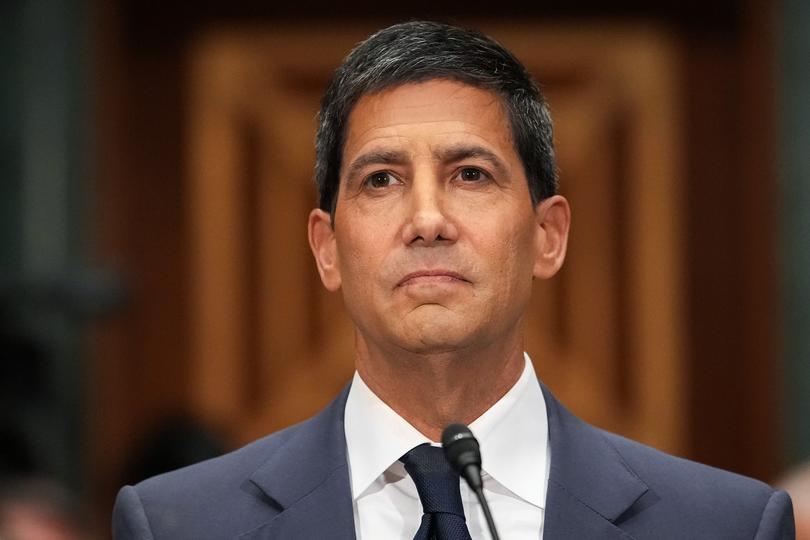
Crypto markets experienced a notable pullback on Tuesday, influenced by Federal Reserve chair nominee Kevin Warsh’s confirmation hearing and heightened concerns regarding the stalling of peace talks involving Iran. During his appearance before the Senate Banking Committee, Warsh addressed the importance of maintaining the Federal Reserve’s independence, actively countering speculation of political influences on interest rate decisions.
As uncertainty mounted around ongoing negotiations between Iranian and U.S. officials—especially with a ceasefire deadline approaching—reports surfaced about Vice President JD Vance’s peace talks in Pakistan being halted. In response to the burgeoning tensions, the U.S. government announced sanctions targeted at 14 individuals, entities, and aircraft linked to alleged procurement or transportation of weapons for the Iranian regime.
Bitcoin’s price trajectory was notably affected, dropping from just below $77,000 earlier in the day to around $75,000 during the U.S. trading session. It managed to recover slightly to about $75,700, yet remained 0.9% lower over the previous 24 hours. In parallel, major U.S. stock indices, including the Nasdaq and S&P 500, relinquished early gains, showing declines of 0.1% to 0.2% in the afternoon session. The downturn was more pronounced in cryptocurrency-related stocks: Coinbase (COIN) fell over 6%, Robinhood (HOOD) dropped 4.5%, while Galaxy (GLXY) saw a decline of 5.5%. The stablecoin issuer Circle (CRCL) experienced the most substantial dip at 8.3%.
In the Senate hearing, Warsh responded to inquiries regarding interest rates, firmly asserting that he had never been pressured by former President Trump to lower rates. He stated, “I never said to the President where I think rates should be… and I wouldn’t have even thought about doing so.” This statement sought to reinforce the notion of the Fed’s independence in setting monetary policy. Trump’s previous calls for lower rates put additional scrutiny on the central bank’s autonomy, with the former president expressing disappointment over the prospect of Warsh not acting to cut rates swiftly.
Despite an apparent reluctance to push for immediate rate cuts, Warsh’s comments suggested a general supportive stance toward crypto. He characterized digital assets as integral to the financial services landscape, leading to speculation that his chairmanship could usher in a more favorable regulatory climate for the cryptocurrency sector. Analysts noted that Warsh’s extensive background in crypto investments, combined with his views on financial markets, could positively influence policy development in this area.
Looking ahead, experts anticipate that Warsh’s potential easing stance could cultivate a high-liquidity environment, historically beneficial for risk assets like bitcoin. As the market grapples with external pressures, the direction of U.S. monetary policy will likely remain a focal point for investors assessing future trends in both traditional and cryptocurrency markets.