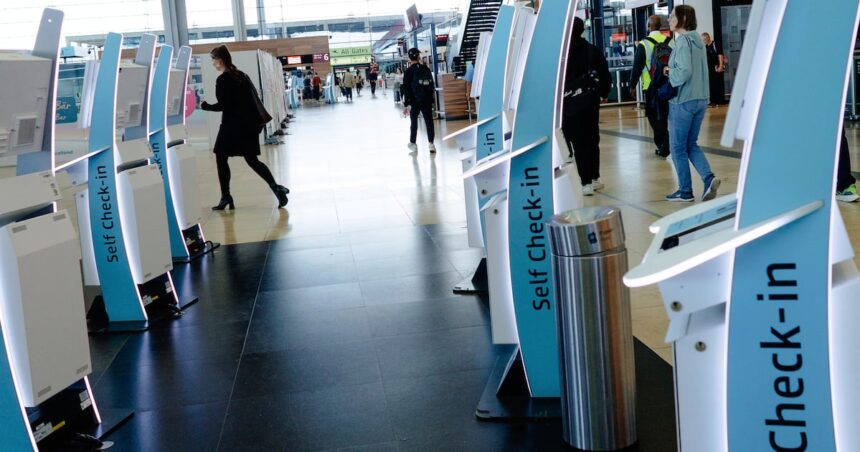
A cyberattack targeting check-in and boarding systems caused widespread disruption across multiple European airports, extending travel chaos into a second consecutive day. Beginning late Friday, prominent airports in Brussels, London, and Berlin experienced significant interruptions, leading to many cancelled and delayed flights as airport personnel scrambled to manage the situation.
Passengers faced long lines and confusion at check-in counters, where airline staff resorted to writing boarding passes by hand and utilizing backup laptops to process those affected. The breadth of the attack affected several major airports but notably spared many others across Europe.
In Berlin’s Brandenburg airport, the impact was visibly evident as travelers dealt with significant delays and cancellation notifications. Efforts to address the disruption included restoring systems and implementing alternative check-in methods, but frustration among passengers remained high due to the extensive delays. Reports indicated that some travelers were left uncertain about their flight statuses as airlines struggled to communicate effectively amidst the chaos.
Despite technical challenges, officials reassured the public that emergency protocols were being followed and that they were working diligently to resolve the issues. The incident raised concerns among passengers and airport authorities alike regarding the cybersecurity of essential travel infrastructure in a time when such vulnerabilities can significantly impact millions of travelers.
As authorities continued to work towards a resolution, travel experts emphasized the importance of enhancing cybersecurity measures across the airline industry to prevent future incidents that could lead to similar disruption. Meanwhile, passengers were encouraged to stay informed about their flight statuses and to arrive at the airport well in advance to navigate the ongoing operational challenges.