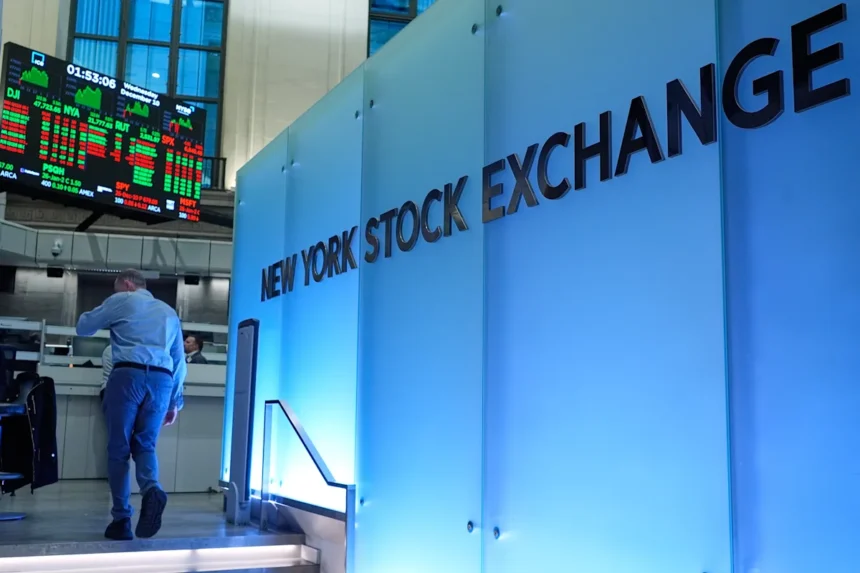
U.S. stocks experienced a varied performance on Thursday, with the Dow Jones Industrial Average climbing toward a record high while more technology-focused indices faced downward pressure. This divergence is largely attributed to concerns stemming from Oracle’s recent earnings report, which reignited worries regarding overspending in the artificial intelligence (AI) sector.
The Nasdaq Composite fell by 0.6%, while the S&P 500 managed to gain nearly 0.2%, striving for a record close following Wednesday’s market rally prompted by the Federal Reserve’s latest interest rate cut. In contrast, the Dow surged approximately 1.3%, amounting to about 600 points, achieving a new all-time intraday high and surpassing its previous record closing level.
Oracle’s financial results, released late Wednesday, heightened concerns about AI investments after the company both missed its cloud sales targets and increased its data center spending by $15 billion. Oracle’s stock plummeted by up to 16%, reflecting apprehensions surrounding tech valuations and the burdens of debt in the sector. This downturn amplified fears that substantial investments in AI may not yield the expected returns.
Wednesday’s broad market rally was fueled by a split decision from the Federal Reserve to reduce rates for the third time this year. Although the policymakers indicated a gradual approach to further easing, Fed Chair Jerome Powell suggested a rate hike would not be feasible for January and emphasized the strength of the U.S. economy.
U.S. jobless claims also made headlines, rising to 236,000—an increase of 44,000 from the previous week and marking the largest jump since 2020. This report emerged as jobless claims had previously dipped to a three-year low during the Thanksgiving week. The next significant signal regarding the labor market will come from the delayed November jobs report, which is expected to be released next Tuesday.
The U.S. trade deficit surprised analysts by narrowing to its smallest margin in over five years, driven by robust exports, which indicates potential support for the broader economy in the third quarter. As companies prepared to release earnings reports, notable firms including Broadcom, Costco, and Lululemon were set to announce their results, further influencing market conditions.
Stock trading platform Robinhood faced a significant share price decline of up to 9% after reporting disappointing trading volumes for November. Meanwhile, Rivian’s stock dropped by 9% following ambitious announcements at its first-ever “Autonomy and AI day,” which promised updates on robotaxi technology and an in-house chip development.
In the energy sector, natural gas prices continued to fall dramatically, driven by milder winter forecasts and increased U.S. production. Prices dropped by more than 16% over just five days, now hovering below $4.30. Analysts cited the combined impact of weather patterns and oversupply as key factors driving this decline.
Fundstrat’s Tom Lee predicted a bullish outlook for the S&P 500, forecasting it could reach 7,700 by the end of 2026, supported by Federal Reserve policies and advancements in blockchain technology. This projection added to a series of positive predictions for the S&P 500 leading into 2026.
While the Dow demonstrated resilience amid a tech-led market downturn, investors appeared to be cautious, responding to fluctuating earnings reports and changing economic indicators. As traders navigated these mixed signals, the market’s volatility is indicative of underlying uncertainties in technology valuations and broader economic conditions.