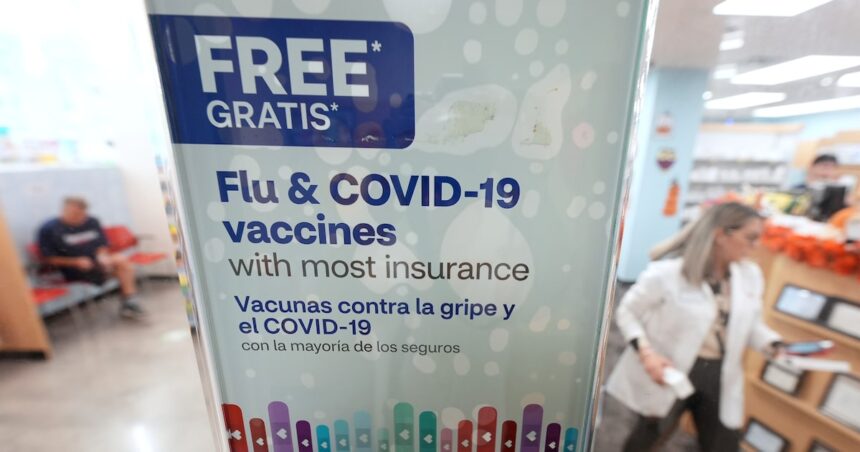
Drugstores across the country are preparing to administer updated COVID-19 vaccines this fall, with insurance plans committed to covering the costs despite a recent lack of recommendations from a key government advisory committee. On Friday, vaccine advisers appointed by Health Secretary Robert F. Kennedy Jr. opted not to provide a specific recommendation for the updated shots, stating instead that individuals should make their own decisions about vaccination.
Typically, endorsements from this advisory group to the Centers for Disease Control and Prevention (CDC) require confirmation from the agency’s director, a protocol usually followed. These recommendations typically trigger multiple layers of insurance coverage and enable pharmacies to administer the vaccines across many states. However, both insurers and government officials have assured that coverage for the vaccines will persist, and numerous states have facilitated vaccine access through pharmacies, which are the primary source for most vaccinations.
As the fall approaches, many individuals begin to seek vaccinations to bolster their defenses against potential winter surges in COVID-19 cases. It is important for patients to confirm coverage with their respective insurance providers. According to a statement from the Department of Health and Human Services (HHS), the advisory committee’s recent vote ensures that “immunization coverage through all payment mechanisms” remains in place. This includes coverage through Medicaid, the Children’s Health Insurance Program, and commercial insurance sold through health insurance marketplaces, as well as the federal Vaccines for Children program, which finances nearly half of childhood vaccinations in the United States annually.
The trade organization America’s Health Insurance Plans has announced that its members will continue to cover the COVID-19 vaccines at no cost to patients until 2026, encompassing all major insurers, with UnitedHealthcare as the lone exception. Nonetheless, UnitedHealthcare has indicated it will cover the updated vaccines without charge under its standard commercial coverage, which applies to both individual plans and those offered through small businesses. Employers providing large group insurance will decide independently on coverage, though many may opt to continue it as the vaccines can mitigate costly hospitalizations resulting from severe COVID-19 cases.
Access to vaccinations has improved since the rollout of the updated vaccines, which initially experienced some logistical challenges. Data from the CDC indicate that about two-thirds of adults receive their COVID-19 shots at pharmacies, while around 30% obtain them at medical offices. Chains like CVS now report that their pharmacies are fully stocked with updated vaccines, capable of delivering vaccinations across all 50 states and Washington, D.C., although prescriptions are required in certain locations, including D.C. and states like Florida and Georgia. Similarly, Walgreens has implemented prescription requirements in some areas.
Currently, annual COVID-19 vaccinations are recommended for everyone aged 6 months and older in the U.S. The Food and Drug Administration has approved the updated vaccines for all individuals aged 65 and older and also for younger individuals and children who are at high risk of severe COVID-19 illness due to specific underlying conditions. The CDC provides a comprehensive list of conditions that increase the risk, including asthma, cancer, cardiovascular issues, obesity, chronic depression, and a history of smoking. While the list is extensive, the CDC notes it is not exhaustive, and patients can consult with medical professionals to assess their eligibility for the vaccine if they do not fall under any listed conditions.
Pharmacies like CVS and Walgreens indicate they will inquire about high-risk factors from patients under age 65 but will not require any documentation to confirm eligibility. According to a CVS Health spokeswoman, the process is straightforward: if patients claim that they are eligible, they will receive the vaccine.