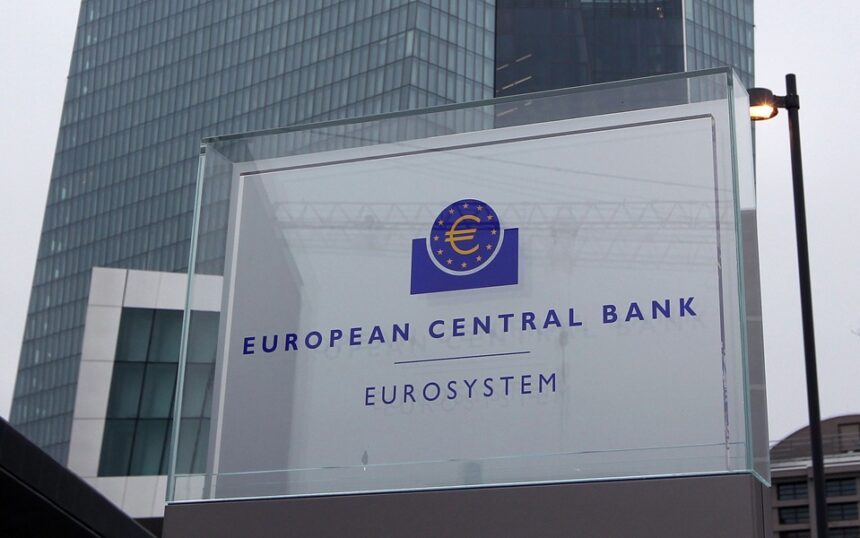
The European Central Bank (ECB) is anticipated to implement a rise in its main interest rate from its current level of 2% to 2.75% by the end of the year. This rate hike marks the first increase by the ECB since 2023 and is expected to have a significant impact on the financial landscape, particularly for Greek banks. Analysts estimate that the increase could yield around €147 million in additional annual interest income for these banks.
However, this financial boon stems not just from the increased cost of loans but also from the uneven response seen in deposit rates. Greek banks are likely to retain a larger portion of the interest rate increase rather than fully transferring it to depositors. Consequently, while borrowing costs will rise, returns on deposits will remain disproportionately low compared to the eurozone average.
A source from a prominent bank indicated that although some adjustments would occur, the rise in term deposit interest rates would not match the ECB’s 0.25% increase. The prevailing situation position Greek deposit yields significantly below the eurozone benchmark, thus enhancing the profit margins for banks while simultaneously constraining depositors’ earnings.
In recent months, the difference between lending and deposit rates, or the interest rate spread, has already widened, indicating a trend that is expected to continue. Data from the Bank of Greece reveals that this spread increased to 4.45% in April, up from 4.08% in March. Notably, the rise correlates with the 3-month Euribor rate, which serves as a precursor to ECB rate changes. By April, this benchmark had climbed to 2.2%, leading to a rise in average interest rates on loans from Greek banks from 4.39% in February to 4.76%.
Conversely, the average interest rate for household term deposits saw a minimal increase, edging up to 1.13% from 1.09%, while business term deposits saw a slight rise to 1.76% from 1.75%. Compared to the eurozone’s average term deposit yield of 1.87% for the same period, Greek deposits remain at the lower end of the scale. In fact, countries such as the Netherlands, Finland, Italy, and France are offering significantly higher returns, with averages of 2.42%, 2.39%, 2.25%, and 2.18% respectively. Other southern European nations like Spain and Portugal also offer better yields at 1.78% and 1.44%.
Greece’s position in terms of deposit interest rates is precarious, sitting second to last in the eurozone, just above Slovenia, where households earn an average of 0.75%. This widening gap between what banks earn from loans and what they pay to depositors is set to become more pronounced should the ECB proceed with its planned rate increase, ultimately favoring bank profitability at the expense of depositors’ returns.