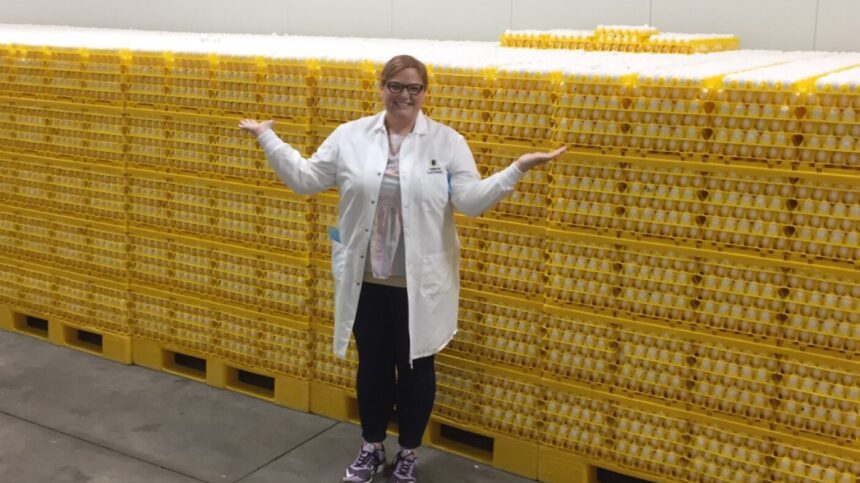
As Easter approaches, the American Egg Board is optimistic about a surge in egg sales, hoping that consumers will take advantage of the currently low prices. Emily Metz, the president and CEO of the organization, described Easter as “our Super Bowl,” emphasizing the importance of the holiday for egg producers and marketers alike.
Just a year ago, eggs were in critically short supply due to a significant avian flu outbreak that decimated tens of millions of laying hens. The repercussions were drastic, with prices soaring and some supermarkets resorting to rationing. Consumers faced daunting grocery bills simply to secure a dozen eggs, driving many to rethink their purchasing habits.
Today, however, the egg market is experiencing a remarkable turnaround. The average retail price of eggs has plummeted to approximately $2.50 per dozen, a stark contrast to the extreme highs witnessed previously. Metz noted the unusual abundance of eggs available, highlighting that “there’s never been a better time to buy eggs” and encouraging shoppers to consider purchasing an extra dozen while prices are favorable.
The shift in the egg market is largely attributed to farmers successfully rebuilding their flocks after last year’s adversity. Currently, there are about nine million more hens in the U.S. laying eggs compared to the previous year, marking a significant recovery. Livestock economist David Anderson from Texas A&M University pointed out that improved safety precautions on farms, changes in the flu virus, or perhaps sheer luck could all be factors in this positive development.
Despite the drop in retail prices benefiting consumers, egg farmers are facing harsh realities. The wholesale prices that farmers receive have sunk by over 90%, now hovering around 70 cents per dozen, which many experts warn is below production costs. Anderson emphasized the severity of the situation, arguing that this pricing model is unsustainable for agricultural producers.
Farmers are wary of reducing their flocks, fearing the potential for a resurgence of avian flu. Mike Puglisi, whose farm was an early victim of the virus outbreak in 2022, expressed the emotional toll it took on him and his operation. He lost 80% of his chicken stock and described the experience as traumatic, given the effort put into raising healthy birds.
Since then, Puglisi has implemented rigorous biosafety protocols at his farm, including biosecurity measures that involve showering employees upon arrival and utilizing technology to keep wild birds away from flocks. These steps have incurred additional costs, and although feed prices have decreased, other expenses continue to rise.
As Easter looms, egg farmers remain cautiously hopeful about the coming demand tied to the holiday. Metz’s call to action is clear: “Get ready to celebrate Easter, Passover, all of the springtime holidays — and maybe dye an extra dozen this year.” However, a word of caution accompanies the festive spirit; while egg prices have stabilized, the cost of chocolate eggs is on the rise, posing a challenge for those planning their seasonal celebrations.