An 85-year-old resident of Chelmsford, Massachusetts, was recently victimized by a sophisticated banking scam that highlights the growing threats posed by cryptocurrency ATMs. Janice Peltz received a phone call from someone she believed to be a representative of TD Bank, who warned her about potential fraud linked to her accounts. Trusting the individual on the other end of the line, Peltz followed their instructions, leading her to withdraw a staggering $18,000 in cash from her bank after hours of conversation.
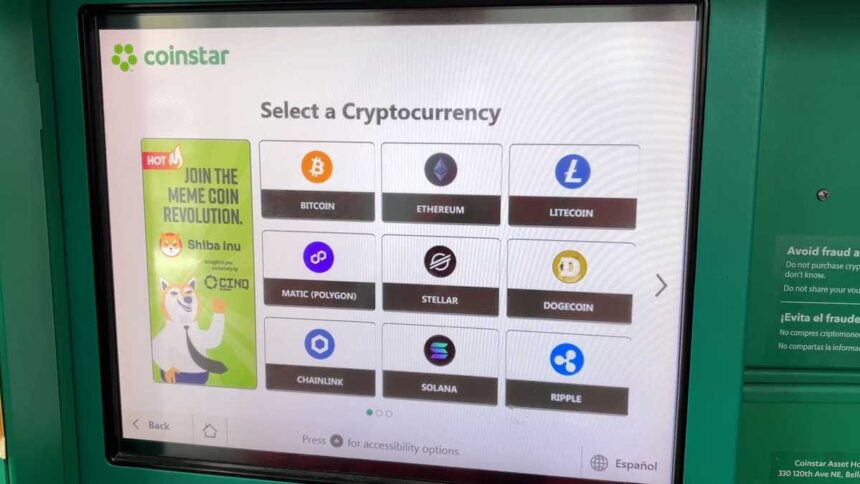
The caller, who turned out to be a scammer, told Peltz that it was imperative she kept this situation confidential, implying that the threat could be from within the bank or even someone she knew. Following his directions, she drove to a local convenience store, Village Variety in Lowell, where she began depositing her cash into a Bitcoin Depot ATM—one of many scattered throughout the state. The process took her around three hours, during which she deposited the money in increments.
Reflecting on the ordeal, Peltz admitted, “Being of an elder age, I didn’t know what a Bitcoin was. It’s almost like I was hypnotized.” Once the funds had been transferred into the machine, they disappeared into the world of cryptocurrency, leaving Peltz without any recourse to retrieve her money. Despite attempting to work with local authorities to recover her lost funds, she expressed that the experience has been “more than devastating,” and for a prolonged period, she found it difficult to absolve herself of the situation.
This incident is unfortunately not isolated. Investigators estimate that Massachusetts residents have suffered losses totaling at least $77 million this year due to Bitcoin ATM scams. The complexity of these scams can be attributed to the quick transmission of cryptocurrency, which scammers leverage from call centers located in various countries. Jim Carney, an investigator from the Essex County district attorney’s office, commented on the dire implications of these machines, noting that once money is converted to cryptocurrency, getting it back becomes almost impossible.
In response to the rising incidence of such scams, Massachusetts lawmakers are contemplating a new bill aimed at enhancing consumer protection regarding Bitcoin ATMs. This proposed legislation includes measures such as imposing daily transaction limits, ensuring refunds for fraud victims, and capping transaction fees. AARP is sponsoring this initiative, and its Massachusetts director, Jennifer Benson, has emphasized the urgency of the situation, explaining that the current landscape resembles a “Wild West” scenario where tracking down lost funds is exceptionally challenging.
To date, at least two Massachusetts cities, Waltham and Gloucester, have completely banned Bitcoin ATMs, reflecting a growing concern over their role in enabling scams. During a recent public hearing on the proposed bill, representatives from Bitcoin Depot and CoinFlip, two key operators of Bitcoin ATMs in Massachusetts, voiced their apprehensions about the legislation. The companies argued that some provisions could effectively ban their operations, citing overly aggressive limitations on daily transactions and unreasonably low fee caps.
In their defense, Bitcoin Depot claimed that a substantial number of residents use their kiosks for legitimate transactions, emphasizing the simplicity and accessibility of in-person, cash-based interactions. CoinFlip echoed this sentiment, asserting their commitment to consumer protection and compliance, highlighting efforts to refund transaction fees when customers fall prey to fraud.
Despite the testimony from these companies, local banks like TD Bank have acknowledged the growing need for public education on how to identify and avoid scams. In a statement, the bank mentioned that it provides clients with resources to help them navigate the increasingly sophisticated landscape of financial fraud.
As officials work to address the issue, the proposed bill remains with the Joint Committee on Financial Services, with many hoping it will pave the way for enhanced protections against the relentless wave of Bitcoin ATM scams.