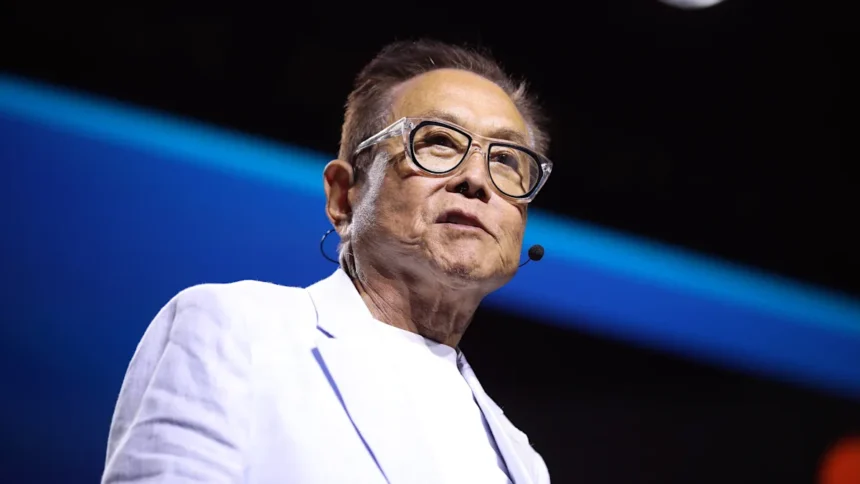
As financial markets begin to show signs of instability, prominent investor Robert Kiyosaki, known for his book “Rich Dad Poor Dad,” has raised alarms about the potential for a significant stock market crash. In a recent post on social media platform X, Kiyosaki referenced his earlier warnings from 2013, predicting that the “biggest stock market crash in history” is imminent by 2026. He expressed concern that the underlying issues that led to the 2008 financial crisis remain unresolved, implying that this new downturn could be even more severe.
The 2008 crisis was triggered by a housing bubble fueled by risky mortgage practices and complex financial instruments linked to those loans. Although stricter regulations were implemented in response, critics assert that financial vulnerabilities have merely transitioned to other areas of the financial system, notably the so-called “shadow banking” sector. Given the scale of wealth currently linked to the stock market, Kiyosaki’s forecasting of a crash surpassing the 2008 decline raises significant concerns over far-reaching changes to global financial stability.
Kiyosaki underscored that a major demographic affected by such an event would be baby boomers. “Retirements will be wiped out all over the world because the world is loaded with debt it cannot pay back,” he stated. This assertion resonates particularly as many retirement portfolios are heavily invested in equities. A report indicated that defined-contribution pension plans in the U.S. allocate nearly 70% of their assets to stocks, while American households have a record 45.4% of their financial assets tied up in equities.
In the face of potential market turmoil, Kiyosaki provides suggestions for investors looking to shield themselves from impending financial fallout. He recommends proactively acquiring assets such as gold, silver, Bitcoin, Ethereum, and stakes in real oil wells. Kiyosaki has long advocated for hard assets like gold and silver, emphasizing that he invests in these metals primarily due to distrust in the Federal Reserve.
Historically viewed as safe-haven investments, gold and silver tend to hold value during economic turbulence, thereby attracting investors during high inflation or geopolitical instability. Kiyosaki shared a personal insight, stating, “I have boxes of gold. I own gold mines.” Additionally, he has highlighted silver for its affordability, suggesting even those with limited means can invest in it.
Recent trends support Kiyosaki’s views, as gold prices have surged over the past year, while silver prices have more than doubled. He also mentioned the advantages of a precious metals IRA, allowing individuals to hold physical gold and silver in a tax-advantaged retirement account, which could serve as a buffer against economic unpredictabilities.
Kiyosaki’s investment strategy extends beyond precious metals to include real estate, which he regards as a resilient income-generating asset, especially in times of economic downturn. He encourages aspiring investors to consider entrepreneurship and side hustles, and invest in rental properties that can provide consistent cash flow. In contrast to the volatility of stock markets, well-situated properties often yield stable rental income and increase in value during periods of inflation.
For those interested in real estate investment, crowdfunding platforms offer a more accessible entry point. Companies like Mogul provide fractional ownership in rental properties, allowing investors to earn monthly income without the burdens of property management. Additionally, Lightstone DIRECT offers accredited investors the chance to access institutional-quality real estate with significant historical returns.
Kiyosaki also supports cryptocurrencies, maintaining a bullish outlook on Bitcoin and Ethereum, despite their notorious volatility. He views price dips as prime buying opportunities, noting the finite supply of Bitcoin. “I am so bullish on Bitcoin I am buying more and more as Bitcoin’s price goes down,” he asserted.
The principle of diversification is becoming increasingly relevant, especially as nearly 40% of the S&P 500’s value is concentrated in its largest companies. Kiyosaki suggests exploring alternative investments, which might include commodities, collectibles, and art. The art market, often overlooked, has shown strong performance and provides a hedge against inflation due to its limited supply.
Platforms like Masterworks now facilitate art investments for the general public, making it easier to own shares in high-value works by renowned artists. With the growing interest in alternatives and the evolving financial landscape, Kiyosaki’s insights serve as a reminder for investors to remain vigilant and informed as they navigate potential risks ahead.