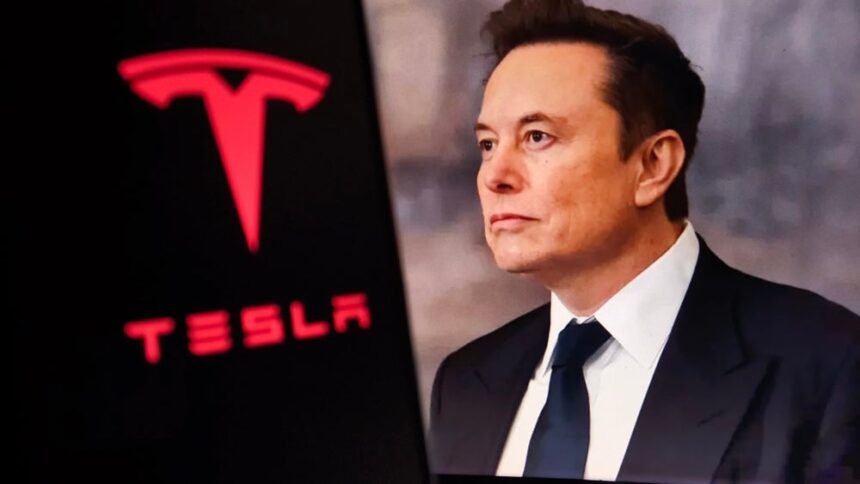
In an unprecedented move within the corporate world, Elon Musk, the CEO of Tesla Inc., has been bestowed with a staggering $1 trillion pay package. This groundbreaking compensation plan received approval from Tesla shareholders earlier this month, marking a significant milestone in the realm of executive remuneration.
The pay structure is designed to align Musk’s financial incentives with the company’s performance, setting ambitious benchmarks that he must achieve to qualify for any financial rewards. Critics, however, have raised concerns about potential loopholes. They argue that Musk could exploit these gaps by making lofty promises while only meeting minimal thresholds that allow him to secure substantial rewards.
Specifically, the package includes 12 tiered grants of restricted stock, all contingent on reaching certain valuation and operational goals. The milestones for market capitalization begin at $2 trillion and progress in increments of $500 billion, culminating at a remarkable $8.5 trillion. Operational targets encompass sales quotas for key products and EBITDA tiers that start at $50 billion, eventually maxing out at $400 billion.
Musk has a decade to meet these ambitious targets. If he achieves a new valuation and fulfills any of the operational goals—even in any order—he would receive 35.312 million shares of Tesla’s restricted stock, which would increase his current stake of nearly 16% by about 1%.
Despite the visionary nature of this plan, naysayers argue that the lower achievement thresholds may be too easily attainable, while the more ambitious goals related to profitability may be excessively challenging. This disparity could lead to Musk securing one of the largest payouts in corporate history without fully meeting the intended performance targets, potentially disadvantaging shareholders in the process.
On the other side of the debate, Musk and many analysts on Wall Street express confidence in the pay package. They draw comparisons to a similar strategy implemented in 2018, which proved beneficial in propelling Tesla’s stock price upward. This optimism hinges on Musk’s history of setting and achieving high-stakes goals that have historically led to substantial growth for the company.
Nevertheless, the fairness of Musk’s compensation and its broader implications for Tesla’s shareholders remain contentious topics. As the coming years unfold, stakeholders will be closely examining whether the newly established pay package ultimately serves as an asset or a liability for Tesla and its investors.