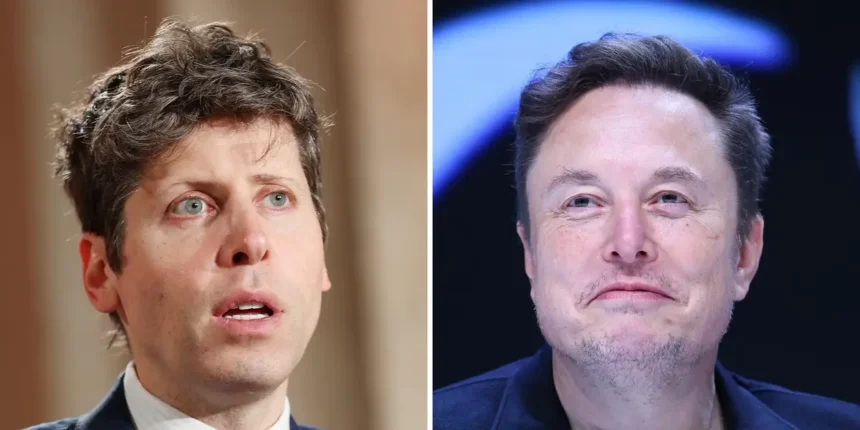
Day Four of the high-profile civil trial concerning Elon Musk’s lawsuit against Sam Altman unfolded with Musk returning to the witness stand. Musk was subjected to rigorous questioning from OpenAI’s lead attorney, William Savitt, alongside brief inquiries from Microsoft’s legal representative, as the tech giant is also a defendant in the case. Musk’s financial manager, Jared Birchall, was called to testify by Musk’s legal team, providing key insights into Musk’s financial relationships with OpenAI.
One critical element of the trial revolved around Musk’s ownership of xAI, the company behind the AI model Grok. During his testimony, Musk argued that xAI poses no legitimate threat to OpenAI, asserting that it is significantly smaller than its rivals, categorizing companies in order from largest to smallest: Anthropic, OpenAI, Google, and then himself. Musk emphasized that xAI is merely a fraction of OpenAI’s size and hinted at ongoing efforts to reinforce his AI venture, including a merger with SpaceX and a recent acquisition deal with AI coding startup Cursor.
Throughout the session, Musk’s characteristically dramatic pronouncements on AI drew the attention of the court. He attempted to weave in references to an AI “Terminator” scenario, leading US District Judge Yvonne Gonzalez Rogers to intervene. “We’re not going to talk about extinction in this case,” she stated firmly, navigating the courtroom atmosphere back to the pertinent issues at hand.
Further testimony from Birchall shed light on Musk’s financial contributions to OpenAI, which reportedly totaled $38 million across roughly 60 donations. Birchall underscored that these funds were not given without expectations, asserting there were implied restrictions on their use. Responding to cross-examination, Birchall noted that he had specific understandings with Musk and other founding members regarding the deployment of these donations.
Musk’s previous involvement with OpenAI came under scrutiny during Birchall’s testimony, particularly regarding shared security expenses related to an office-sharing agreement with Musk’s other venture, Neuralink, which aims to integrate human brains with computers. Birchall disclosed that security arrangements became increasingly necessary as OpenAI’s profile grew, suggesting an acknowledgment of the risks associated with the high-stakes world of AI development.
As the first week of the trial drew to a close, Birchall’s testimony paved the way for upcoming proceedings next week. The jury is slated to hear from Greg Brockman, OpenAI’s president and cofounder, recognized as a pivotal witness due to his diary entries, which could reveal contentious details regarding Musk’s exit from the company in 2018. These entries may illustrate tensions over OpenAI’s shift to for-profit status without Musk’s involvement, further complicating the narrative of the ongoing legal dispute.
Musk’s lawsuit calls for Brockman and Altman to be stripped of their positions within OpenAI and to surrender any equity if found liable, significantly heightening the stakes of this landmark case at the intersection of technology, ethics, and fiduciary responsibility.