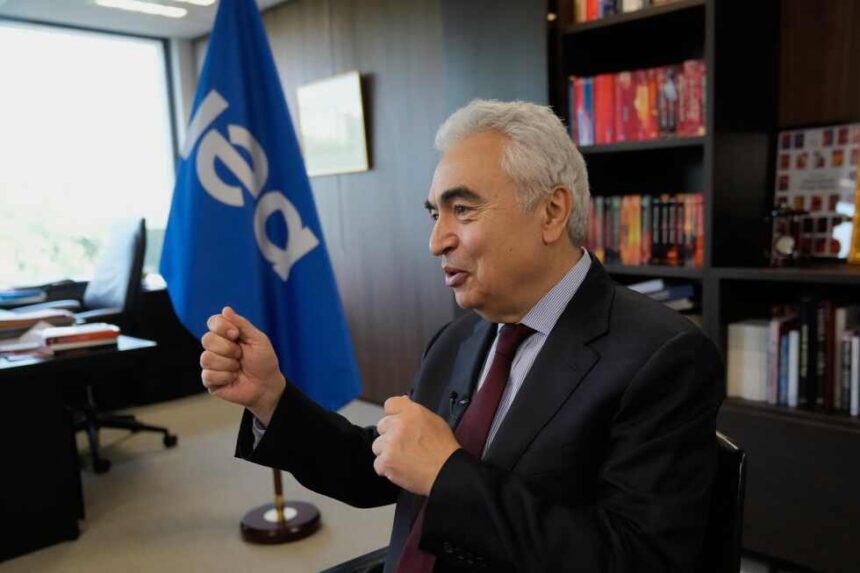
The head of the International Energy Agency (IEA) has issued a stark warning about Europe’s dwindling jet fuel supplies, stating that the continent may only have about six weeks of fuel left. In an interview, IEA Executive Director Fatih Birol emphasized that this situation is a consequence of ongoing oil supply disruptions caused by the conflict in Iran. He highlighted the potential for flight cancellations to emerge imminently if oil supplies remain obstructed.
Birol characterized the current energy crisis as “the largest we have ever faced,” attributing it to the obstruction of essential oil and gas supplies flowing through the Strait of Hormuz. He cautioned that the escalating situation is likely to have profound implications for the global economy, explaining that the longer the conflict persists, the more severe the economic ramifications will be, including rising inflation and stunted economic growth worldwide. He anticipates increases in petrol, gas, and electricity prices, which are already beginning to burden consumers across various regions.
The fallout from the crisis will affect countries unevenly, with developing nations in Asia, Africa, and Latin America expected to bear the brunt of the pain. “The countries who will suffer the most will not be those whose voices are heard a lot,” Birol noted, stressing that while some nations may have more resources than others, no country can escape the impacts of this disruption.
Regarding the Strait of Hormuz, Birol warned that unless the waterway is reopened permanently, vital oil products could become scarce. He specifically pointed out that Europe should be prepared for news of flight cancellations due to a lack of jet fuel, underscoring the crisis’s immediate impact on commercial air travel.
Additionally, Birol criticized Iran’s introduction of a “toll booth” system for ships passing through the Strait, warning that normalizing such practices could set a dangerous precedent for other key waterways, like the Malacca Strait in Asia. He called for the unconditional flow of oil from one point to another, emphasizing the need for unimpeded access to energy resources.
In terms of mitigation efforts, Birol noted that there are over 110 oil-laden tankers and more than 15 liquified natural gas carriers currently waiting in the Persian Gulf, which could alleviate some of the energy shortages if they are able to transit through the Strait. However, he cautioned that this influx would not be sufficient to resolve the crisis.
Even if a peace agreement were reached, extensive damage to regional energy infrastructure—more than 80 key assets sustaining significant damage—means it could take up to two years to restore production to pre-war levels. Birol expressed skepticism about the quick recovery, predicting a gradual process before the industry can fully recuperate from the extensive disruptions caused by the conflict.