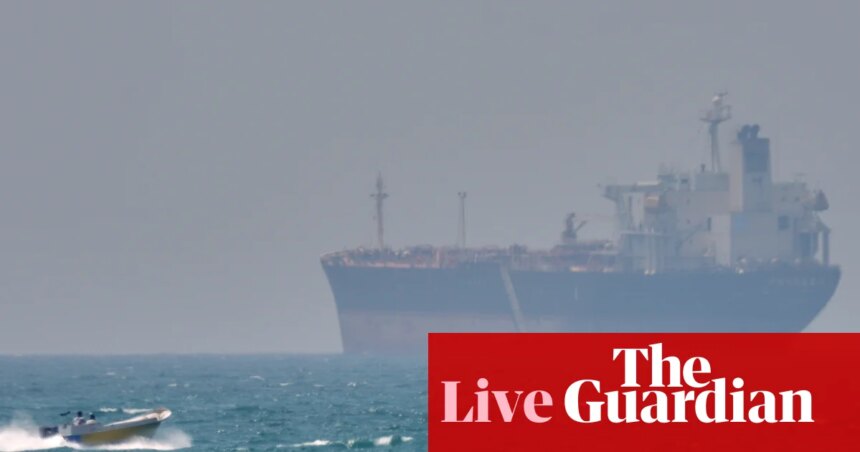
European stock markets experienced a decline at the onset of trading, as the initial optimism surrounding a potential Middle East peace agreement dissipated. The FTSE 100 in London fell by 42 points, or 0.4%, settling at 10,626 points, moving away from a peak it had reached at the end of the previous week. Germany’s DAX index registered a more significant drop of 1.3%, while Italy’s FTSE Mib experienced a decrease of 1.1%.
The turmoil surrounding the Strait of Hormuz has left investors on edge. According to Chris Beauchamp, chief market analyst at investing platform IG, the optimism that characterized Friday has given way to uncertainty regarding the situation in the strait. “Friday’s euphoria has given way to confusion,” Beauchamp stated, noting that despite Iran’s declaration of closure, market sentiment remained cautiously optimistic. He added that U.S. futures are down, and European markets are expected to follow suit though most gains from the previous week still hold. Oil futures have not fully returned to the levels seen earlier last week, highlighting ongoing instability.
Meanwhile, the UK housing market demonstrated some unusual resilience as average asking prices rose by 0.8% in April. Despite rising mortgage costs associated with the ongoing Middle Eastern conflict, the increase represents a continuation of price dynamics, particularly in higher-end markets where buyers are more likely to pay in cash. Property expert Colleen Babcock from Rightmove indicated that the increases were most notable in segments less affected by rising borrowing costs.
Consumer confidence in the UK has reached a 33-month low, driven by growing concerns over inflation and its implications for the labor market. The Consumer Sentiment Index, as reported by S&P Global, fell to 42.3 points in April from March’s 44.1 points. Economist Maryam Baluch emphasized the strain on household finances, predicting further inflationary pressures as energy market disruptions continue. Households appear to be tightening their spending, particularly on large purchases, in light of these financial pressures.
The ongoing conflict in the Middle East has also bolstered the U.S. dollar, which rose to a one-week high against a basket of currencies, dipping the pound below $1.35. This has compounded pressures in the UK bond markets, where yields on UK bonds rose amid geopolitical tensions and domestic political uncertainty connected to recent scandals.
Sarah Breeden, deputy governor of the Bank of England, has highlighted the potential vulnerabilities within the global financial system, warning that various risks could converge, creating a turbulent market environment. She pointed to issues such as high levels of private credit, over-leveraged government bond markets, and inflated asset valuations as factors that could lead to significant financial instability, especially in the event of simultaneous shocks to the interconnected markets.
The geopolitical situation continues to create unease in the UK bond market, with yields on both short and long-term bonds increasing due to escalating conflict and uncertainty surrounding political developments.
As tensions in the oil markets intensify, European gas prices rose sharply, following announcements that Iran was reinstating restrictions on the Strait of Hormuz after a temporary opening. The price of Brent crude oil surged back to $95.60 a barrel, recovering from previous losses.
The volatility in both the stock and oil markets has raised concerns among analysts, with some suggesting that the momentum observed in stock prices may have been premature, given the precarious geopolitical landscape. Jefferies analyst Mohit Kumar remains cautiously optimistic about potential peace talks despite recent setbacks.
In summary, the interplay of geopolitical conflicts, rising energy prices, and fluctuating consumer sentiment is shaping a challenging economic landscape, with implications for both market stability and financial planning in the immediate future.