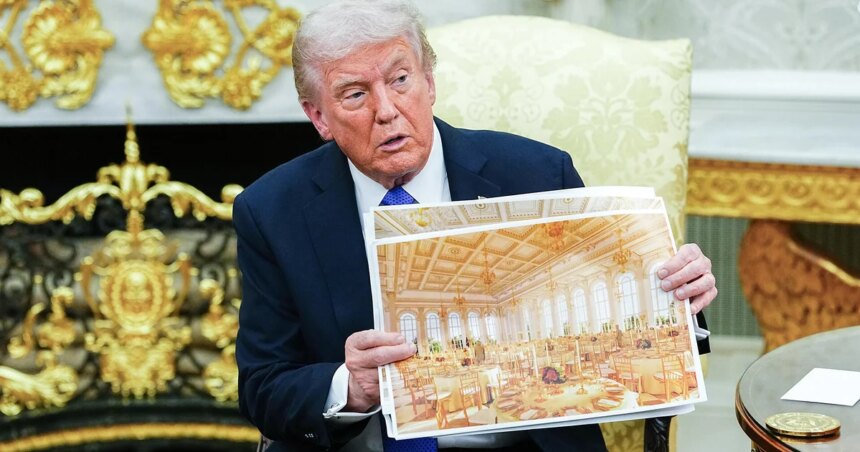
Dozens of executives and companies have contributed to the $300 million construction project of President Trump’s ballroom, which is set to replace the White House’s East Wing. The initiative has garnered attention due to the large number of corporate donors, many of whom are hoping for favorable policies, reduced scrutiny, or expedited approvals for major contracts from the administration. While the White House has not disclosed the exact contributions from each donor, Mr. Trump has maintained that funding will come from private sources and his own finances, not taxpayer money.
In a recent statement, Mr. Trump indicated to reporters that over $350 million has already been raised for the project. CBS News reviewed a list of 37 donors provided by the White House, revealing contributions from major tech companies—including Google and Amazon—as well as cryptocurrency firms like Ripple and Coinbase. Other notable contributors include Nvidia and Susquehanna International Group.
The president recently hosted a dinner to express gratitude towards the donors and stakeholders, although not all individuals invited had made contributions. Regarding potential conflicts of interest tied to these donations, White House Press Secretary Karoline Leavitt defended the initiative, stating that critics questioning these contributions would have raised concerns had taxpayers been responsible for funding the project instead.
The roster of donors spans various sectors, from Big Tech to defense contractors. Noteworthy contributors include Google, Palantir, Amazon, Microsoft, and T-Mobile. Notably, YouTube has pledged $22 million as part of a settlement in a case linked to the platform’s temporary suspension of Mr. Trump after the Capitol riot in 2021.
Palantir has secured over $800 million through government contracts for fiscal year 2025, a significant increase compared to prior years, positioning the company as a vital entity within the Trump administration’s data management efforts across federal agencies. Meanwhile, both Amazon and Microsoft have similarly benefited from substantial government contracts.
Concerns have arisen regarding T-Mobile’s potential benefits from a planned mobile service linked to the Trump Organization, despite a spokesperson stating that the company has no role in the construction financing process for the ballroom.
Nvidia’s contributions arrive alongside its approval to export advanced chips to China, as the company’s CEO advocates for increased access to the Chinese market. The administration’s approval to ship AI chips to the United Arab Emirates is also pending.
In the cryptocurrency space, several major firms made notable contributions to the ballroom fund. Coinbase confirmed its donation amid ongoing regulatory inquiries by the Securities and Exchange Commission regarding its past disclosures. Simultaneously, the Winklevoss twins, founders of the Gemini crypto exchange, also supported the initiative with substantial contributions.
The defense sector is represented through significant donations from companies like Lockheed Martin, which typically acquires billions in federal contracts annually. Another contributor, Booz Allen Hamilton, relies on government contracts for the majority of its revenue, although it has faced challenges under the current administration’s budget constraints.
Additionally, Comcast, which has expressed interest in acquiring Warner Bros. Discovery, is highlighted as a donor amidst historical scrutiny of its business dealings under past administrations.
The controversy surrounding funding these large projects raises questions about the intersection of corporate contributions and governmental policymaking. The White House has yet to provide extensive comments on these financial relationships, and CBS News has reached out to the involved companies for further details.