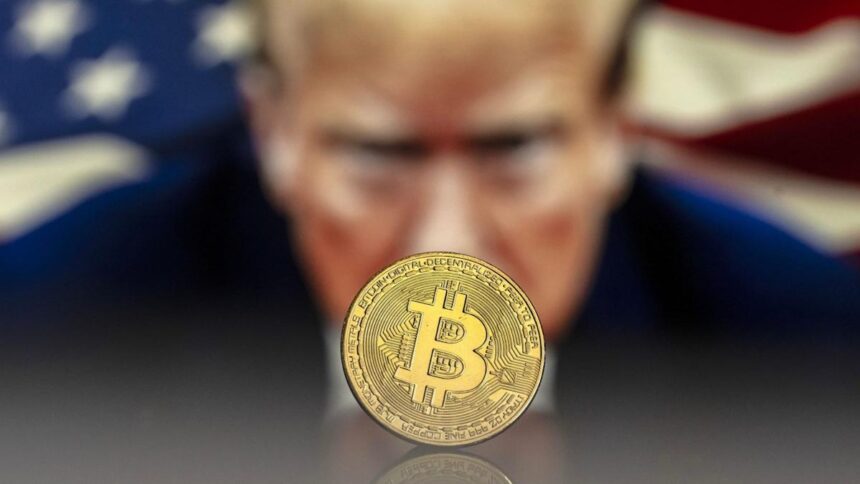
When President Donald Trump assumed office, expectations were high for the cryptocurrency sector, particularly for bitcoin, as the situation appeared ripe for increased legitimacy and market stability. The introduction of the GENIUS Act, which aimed to position the United States as the “crypto capital of the world,” was backed by a White House fact sheet detailing its ambitious vision.
However, a year into Trump’s second term, a growing chorus of experts is sounding alarms about investing in bitcoin. Concerns are amplified by the involvement of the Trump family in the cryptocurrency space, specifically their interest in ventures like World Liberty Financial, leading to questions about potential conflicts of interest. A Financial Times opinion piece by Rana Foroohar highlights digital assets as prime candidates for conflicts that could disrupt the broader economy.
Dean Lyulkin, co-CEO of Cardiff, an alternative business lending firm, underscores the complications arising from the Trump family’s association with cryptocurrencies. He points to the contentious presidential pardon of Changpeng Zhao, co-founder of Binance, which has ties to World Liberty Financial, as an example of cronyism that may undermine confidence in the market.
Lyulkin has urged caution around bitcoin investments during this administration’s tenure. He pointed out that the Trump family’s business dealings in cryptocurrency make it a target for adversarial nations such as China and Russia. “They have the power to move these types of markets around today because of how small they are still,” he explained.
As a risk mitigation strategy, Lyulkin advises limiting cryptocurrency investments to no more than 5% of an investor’s portfolio. This conservative approach reflects heightened concerns about the volatility and regulation surrounding crypto assets.
Echoing similar sentiments, Jay Zigmont, a certified financial planner and founder of Childfree Trust, also recommends a cautious stance on cryptocurrency. For clients eager to include crypto in their portfolios, he suggests keeping it to a small percentage—10% or less for speculative investments like cryptocurrencies or stocks.
The inherent risks are compounded by the fact that cryptocurrencies are still relatively new and largely unregulated. Zigmont emphasizes that these assets lack the historical stability seen with traditional investments like stocks and bonds.
Many investors have considered bitcoin as a hedge against inflation or economic downturns, but Lyulkin is skeptical about its viability in that capacity. He argues that while gold has appreciated significantly—over 60% this year—bitcoin has remained stagnant, failing to draw the capital that has flowed into precious metals.
In summary, experts are increasingly warning against significant investment in bitcoin, particularly during Trump’s presidency, citing conflicts of interest and market vulnerabilities as key reasons to proceed with caution in the ever-evolving cryptocurrency landscape.