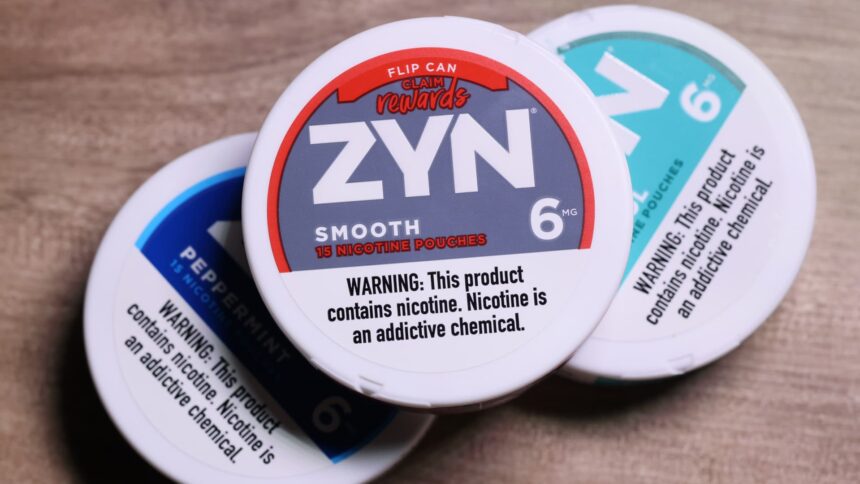
The Food and Drug Administration has granted approval for Philip Morris-owned Zyn nicotine pouches to be marketed with claims of being less harmful than traditional cigarettes. This decision represents a significant achievement for the tobacco conglomerate amidst a broader shift in regulatory practices under the Trump administration, which is loosening restrictions on nicotine products.
The FDA’s ruling permits 20 distinct Zyn products to assert that transitioning from cigarettes to Zyn can diminish the risk of serious health issues, including mouth cancer, heart disease, lung cancer, stroke, emphysema, and chronic bronchitis. Unlike standard tobacco products, Zyn pouches contain nicotine but no tobacco. Users place them between their gums and lips, and their popularity has surged particularly among conservative audiences, tech industry workers, and others who tout them as a cleaner alternative to cigarette smoking and chewing tobacco or as a productivity enhancer.
It is crucial to note that this FDA approval does not imply that Zyn is a safe product. The agency has emphasized that there truly is no tobacco product without risk, advising against use by youth and cautioning adult non-users against starting. Nevertheless, this order empowers Philip Morris with a compelling health claim for one of the fastest-growing segments in the nicotine market while traditional cigarette sales continue to wane in the U.S.
The regulatory landscape has become increasingly friendly towards nicotine-related products under President Trump. After previously supporting restrictions on flavored e-cigarettes during his first term, Trump reversed course in the lead-up to the 2024 election, claiming he would “save vaping.” His administration has since pursued a more industry-friendly approach, paving the way for certain flavored e-cigarettes and nicotine pouches to remain on the market pending further review by the FDA.
This regulatory shift has often been attributed to substantial lobbying efforts from the tobacco and vaping industries, arguing that adult smokers require greater access to less harmful options. A White House spokesperson noted that President Trump had consistently promised to broaden access to nicotine vapes, pouches, and similar products, emphasizing that decisions were guided by “Gold Standard Science.”
Zyn has also emerged as a cultural symbol within conservative circles, notably enhanced by former Fox News host Tucker Carlson’s promotion of the brand, before his own pivot to launch a competing nicotine pouch brand, Alp. Reports indicate that members of Trump’s inner circle, including Health and Human Services Secretary Robert F. Kennedy Jr., utilize nicotine pouches, reflecting their foothold in political circles.
Earlier this year, the FDA had already authorized the sale of the same 20 Zyn products for 2025, but did not allow Swedish Match—Philip Morris’s subsidiary responsible for Zyn—to market them as reducing disease risk. The recent ruling goes a step further, enabling the company to make specific lower-risk claims associated with significant smoking-related health conditions.
Bret Koplow, acting director of the FDA’s Center for Tobacco Products, remarked that the agency’s review process for modified risk products aims to provide adult users with clear, scientifically-based information about the relative harms of various tobacco products, facilitating informed decisions.
The products included in this approval span various flavors such as Zyn Chill, Cinnamon, Citrus, Coffee, Cool Mint, Menthol, Peppermint, Smooth, Spearmint, and Wintergreen, with each available in both 3-milligram and 6-milligram nicotine strengths.
Stacey Kennedy, CEO of Philip Morris U.S., heralded the FDA’s decision as a landmark moment for the over 45 million legal-age nicotine consumers in the nation, asserting that this news ensures they have access to accurate, scientifically grounded information regarding the risks associated with smoking and the benefits of switching to Zyn.