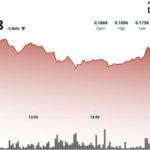
The U.S. Federal Reserve (Fed) made a significant move on Friday, injecting $29.4 billion into the banking system through overnight repurchase agreement (repo) operations. This action has generated a wave of optimism on social media platforms focused on cryptocurrencies, particularly concerning assets like Bitcoin, which has experienced a noticeable cap on its gains recently. Although the injection is the largest since the onset of the coronavirus pandemic in 2020 and seeks to alleviate liquidity concerns, industry experts emphasize that such actions are not unprecedented.
This liquidity influx followed a period of growing stress within financial markets, particularly for short-term funding. The use of the standing repo facility (SRF) aims to bolster cash availability for primary dealers and banks, countering the impact of liquidity constraints that have led to increased repo rates. By lowering these rates to more typical levels, the Fed hopes to prevent a sudden freeze in funding markets, providing banks with the much-needed flexibility to manage their reserves while keeping a close watch on the evolving situation.
To unpack these developments, it is essential to understand the mechanics behind repos and bank reserves. A repo, or repurchase agreement, functions as a short-term loan that enables one party with surplus cash to earn a return while the other seeks liquidity against valuable collateral, often U.S. Treasury securities. These agreements involve a quick process where one party lends cash with a promise to repurchase the collateral the next day.
The impact of these transactions extends to bank reserves. When cash is lent, the reserves at the lender’s bank diminish, while those at the borrower’s bank rise. This interconnection means individual banks can experience strain if numerous accounts lend to other institutions. Banks need sufficient reserves to fulfill regulatory mandates and carry out daily operations. In times of reserve shortages, banks can tap into the repo market or other Federal Reserve facilities, such as the discount window.
The recent declines in bank reserves to $2.8 trillion and the tightening of lendable cash, exacerbated by quantitative tightening (QT) and a buildup in the Treasury General Account (TGA) at the Fed, prompted the Fed’s intervention. By injecting liquidity through the SRF, the Fed aims to stabilize the financial system and avoid potential crises that could adversely affect risk assets like Bitcoin.
While the Fed’s recent move contributes to easing liquidity pressures, it is crucial to note that it does not equate to quantitative easing (QE). QE involves the Fed’s direct asset purchases which expand its balance sheet over an extended period, aimed at increasing overall liquidity within the system. Instead, Friday’s actions are characterized as a temporary and reversible liquidity tool.
Market analysts are already weighing in on the implications of the Fed’s recent decision. Andy Constan, CEO and CIO of Damped Spring Advisors, noted on social media that the current situation might resolve itself without the need for more aggressive Fed measures. He pointed out that if the system-wide reserves remain scarce, the Fed may need to implement more substantial actions. Until then, the prevailing situation is largely a matter of interbank adjustments, with the potential for credit stress.
In conclusion, while the Fed’s $29.4 billion liquidity boost has instilled hope among cryptocurrency enthusiasts, the move is ultimately a stopgap measure aimed at stabilizing the funds available in the banking system. The interconnected dynamics of repos, bank reserves, and broader market liquidity will continue to shape the financial landscape in the coming weeks.