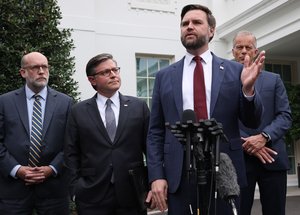
Markets experienced a decline on Tuesday as the looming prospect of a federal government shutdown escalated concern among investors. Stock futures slid, and the dollar weakened, reflecting a growing apprehension after Vice President J.D. Vance indicated that negotiations between Democrats and Republicans remain gridlocked over crucial funding for federal operations.
Vance remarked, “I think we’re headed to a shutdown because the Democrats won’t do the right thing,” highlighting the evident divisions following a meeting at the White House involving congressional leaders and President Donald Trump. The Dow Jones, S&P 500, and Nasdaq futures each dipped about 0.2% in premarket trading as hopes dimmed that a last-minute resolution could avert a shutdown by the impending midnight deadline.
The dollar fell against major currencies including the euro, sterling, and Japanese yen. Meanwhile, gold prices surged, reaching a peak of $3,871 early in the day before slightly retreating. The precious metal’s ascent—up approximately 45% this year—was attributed to the uncertainty surrounding the potential government shutdown, according to KCM Trade analyst Tim Waterer.
The deadlock persists as Republicans push for a straightforward, short-term spending patch to fund the government through November 21. Democrats, however, are hesitant to support such measures unless an extension of Affordable Care Act insurance subsidies, set to expire at year’s end, is also included. Following the Monday meeting, both sides exchanged blame for the impasse. Democratic leaders Hakeem Jeffries and Chuck Schumer stressed that the negotiation dynamics were still far from reaching a consensus. Schumer noted, “We have very large differences,” yet he acknowledged that Trump’s acknowledgment of Democratic concerns was a new development.
On the Republican front, House Speaker Mike Johnson expressed frustration, saying, “They wouldn’t back off on any of these crazy demands.” This ongoing stalemate raises the specter of a government shutdown that would be the first since the 2018-2019 impasse when the government was shuttered for five weeks.
If the shutdown occurs, it would disrupt various public services and delay paychecks for federal employees. Additionally, economic indicators could face setbacks, as the September jobs report, scheduled for release on October 3, would be postponed. The Department of Labor confirmed this would also apply to the monthly inflation data intended for release on October 15 if funding is not secured by then. Analyst Jim Reid from Deutsche Bank noted that this could leave the Federal Reserve without current data ahead of its upcoming meeting on October 28.
The Trump administration has also hinted at potential mass firings of federal staff, and airlines have cautioned that a shutdown could impede flight operations, as air traffic controllers and security officers would work without pay. As the deadline approaches, the economic ramifications of a government shutdown loom large, with widespread implications for investor confidence and the broader market dynamics.