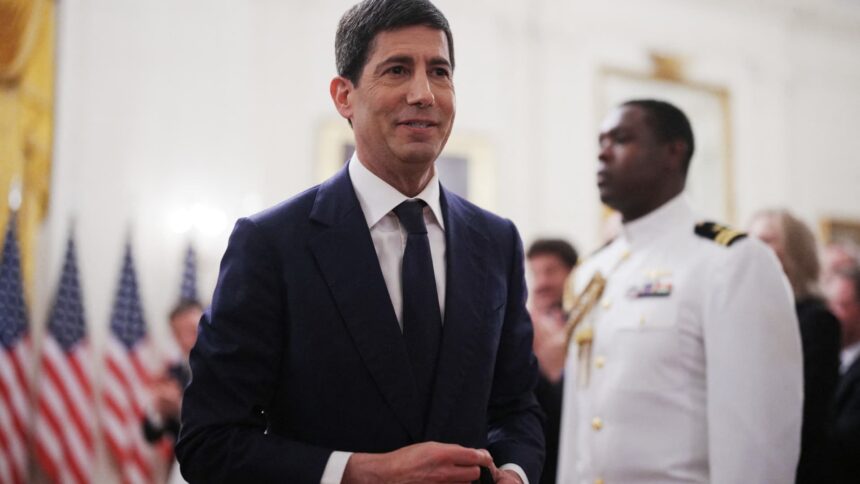
In a significant move reflecting a shift towards a more conservative approach, Kevin Warsh, the newly appointed Chairman of the Federal Reserve, has welcomed two prominent economic policy researchers to his team. Paul Winfree and Daniel Heil are set to assist Warsh in his initiatives, signaling a noteworthy direction for the central bank.
Winfree, who previously served in the Domestic Policy Council during the Trump administration, is known for his authorship of a chapter in the conservative policy framework “Project 2025.” In his contribution, he explored various ideas to reform the Federal Reserve, including the controversial proposition to alter the Fed’s dual mandate, which tasks the institution with promoting maximum employment alongside price stability. Winfree advocates for a narrower focus on “protecting the dollar and restraining inflation,” a point he aims to bring to the forefront of policy discussions.
Heil, associated with Stanford’s Hoover Institution, where Warsh also held a prior role, will also work under Warsh as a temporary contractor. Their collective experience is expected to enhance Warsh’s policy analysis and planning efforts on specialized projects that align with their past collaborations. However, as of now, Warsh has not finalized other permanent appointments.
Warsh’s personnel choices have become a focal point of scrutiny, especially given his extensive network of advisors, which includes high-profile figures such as former Secretary of State Condoleezza Rice, investor Stanley Druckenmiller, and Chevron’s CEO Mike Wirth. These individuals attended Warsh’s swearing-in ceremony, underlining the significant expectations surrounding his leadership.
Despite his connections, Warsh appears to have a limited circle of close advisors with backgrounds in the Federal Reserve or other leading central banks. His tenure as a Fed governor during the tumultuous 2007-2008 financial crisis informs his unique perspective; he has publicly articulated a desire for “regime change” within the Fed, suggesting a willingness to confront entrenched practices.
During his swearing-in ceremony, Warsh softened his previous rhetoric regarding the Fed’s staff, emphasizing his goal to foster an environment conducive to high-quality work. This newfound tone signals an intention to balance reformative ambitions with a collaborative spirit.
The Federal Reserve itself has declined to comment further on these appointments or Warsh’s evolving agenda. However, as he settles into his role, the implications of these changes on national economic policy are likely to be closely monitored by analysts and stakeholders alike.