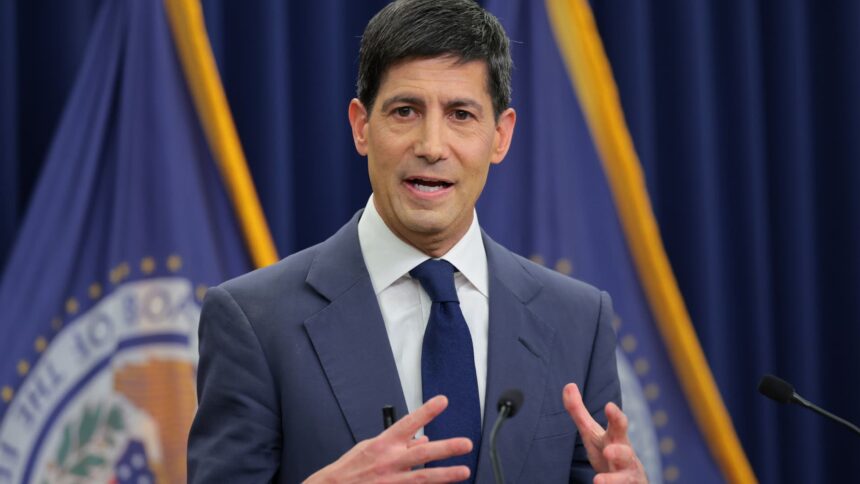
Federal Reserve Chairman Kevin Warsh has initiated a significant transformation at the central bank, introducing a bold framework aimed at overhauling its policy-setting processes. During a press conference following his inaugural meeting since assuming leadership, Warsh revealed plans for five task forces that are set to comprehensively reassess the Fed’s operational approaches across various critical areas.
The task forces will delve into multiple facets of monetary policy, including the communication strategies employed by the Fed, the data utilized to gauge economic conditions, the causes and perceptions of inflation, the impacts of technological advancements like artificial intelligence, and the management of the Fed’s substantial $6.7 trillion balance sheet. Warsh emphasized that these task forces will approach their reviews by starting from “first principles,” aiming to ask challenging questions and explore alternatives.
Warsh’s tone during the announcement marked a departure from prior criticisms he had levied against the Fed, particularly during his campaign for the chairmanship. While he previously called for a “regime change” and pointed to a “credibility deficit” within the institution, his initial remarks in office reflected a newfound appreciation for the Fed’s existing structures and traditions. This shift in rhetoric is indicative of a broader effort to foster collaboration among Fed members as he institutes these fundamental changes.
Scott Clemons, chief investment strategist at Brown Brothers Harriman, likened Warsh’s approach to a “regime change in a velvet glove,” implying that the reforms may lead to substantial shifts in operational practice without disrupting the institution’s core functions. Several seasoned Fed veterans expressed support for Warsh’s direction, noting that building consensus through task forces is a typical method for implementing change within the organization.
Former Fed Vice Chair Roger Ferguson highlighted that organized evaluations like Warsh’s can facilitate effective reform while preserving beneficial practices. Loretta Mester, former president of the Cleveland Fed, underscored the organized nature of Warsh’s strategy, suggesting that it allows for a faster review of issues than past initiatives, which often lacked the same level of codification.
One of the most immediate changes under Warsh’s leadership is in the realm of communication. The recent post-meeting statement from the Federal Open Market Committee (FOMC) abandoned traditional boilerplate language and conveyed a more straightforward message regarding interest rate decisions and current economic conditions. Mester acknowledged the benefits of this simpler communication style while also noting the necessity for the Fed to clarify its “reaction function” in future communications.
Further areas of reform likely to emerge from the task forces include the review of the “dot plot” forecast system used by FOMC participants and potential adjustments to the format of news conferences that accompany policy announcements. The task forces are anticipated to tackle broad operational issues, including the Fed’s involvement in bond markets—a concern Warsh has long raised—along with a re-evaluation of the metrics used to assess inflation, particularly after recent predictions proved inaccurate.
Rick Rieder from BlackRock described Warsh’s initiatives as signaling a new era of monetary policy in the United States, emphasizing the importance of establishing confidence in the Fed’s ability to meet its monetary targets. Mester also stressed that clarity in how the Fed will navigate future monetary policy decisions is crucial for effective communication, suggesting that the institution must move beyond vague reassurances to explicitly outline the factors influencing its decisions.
As Warsh embarks on this comprehensive reassessment of the Fed’s operational foundation, the broader implications of these reforms will be closely monitored by economic analysts and market participants. The successful execution of this ambitious plan could redefine how the Fed engages with policy formulation and communication moving forward.